
Utility color codes are the standardized spray-paint colors and flags that tell you what type of underground line is buried in a specific spot: red for electric, yellow for gas, blue for water, and so on. If you’ve ever walked outside to find your lawn striped in bright paint, this guide explains exactly what every color, symbol, and letter means and why it matters before anyone digs.
Property owners across Florida see these markings constantly, whether it’s before a fence installation, a new pool, or an EV charger conduit run. Whether you’re working with underground utility contractors in Orlando or planning a residential excavation elsewhere in the state, understanding these markings helps prevent costly utility strikes and project delays.
As a trenchless drilling and underground utility company, we deal with utility color codes on every single project, and knowing how to read them can save you from a damaged line, a canceled permit, or a very expensive repair bill.
What Are Utility Color Codes?
Utility color codes exist so that anyone standing over a dig site, a homeowner, an excavator, or a locating technician, can identify what’s buried without guesswork. The system was developed by the American Public Works Association (APWA) and is now the national standard used by every state’s 811 “call before you dig” program.
- A property owner or contractor submits a locate request through 811.
- Utility owners (electric, gas, water, telecom) send locators to the site within a few business days.
- Locators use detection equipment to trace each line and mark its path with spray paint, flags, or both.
- The color used always corresponds to the type of utility found, never to the company that owns it.
The Full APWA Utility Color Code Chart
Below is the complete color-code breakdown recognized nationwide. These two sentences cover the basics: eight standard colors represent eight categories of underground infrastructure, and the same code applies whether you’re in Miami, Orlando, or anywhere else in the country.
- Red: Electric power lines, cables, conduit, and lighting cables
- Yellow: Gas, oil, steam, and petroleum or other flammable materials
- Orange: Communication lines, including fiber optic, cable TV, and telephone
- Blue: Potable water lines
- Green: Sewer and drain lines
- Purple: Reclaimed water, irrigation, or slurry lines
- Pink: Temporary survey markings or reference points
- White: Proposed excavation area or route
Why Do These Utility Color Codes Matter for Property Owners?
Most homeowners assume utility marking is only a contractor’s concern, but the paint on your lawn is really a safety map for everyone on the property. Misreading or ignoring a mark can mean a severed power line, a flooded yard, or a gas leak, none of which are cheap or quick fixes.
Property owners should pay attention because:
- Striking an unmarked or misread line can knock out power or water to your entire block.
- Utility strikes often void excavation permits and can trigger fines from the utility owner.
- Repairing a damaged gas or electric line is far more expensive than the cost of a proper locate.
- Marks fade within a few weeks, so timing your project around them matters.
What Do the Shapes, Letters, and Numbers Next to the Paint Mean?
A single color tells you the utility type, but the shapes and text around it tell you the details. Locators use a consistent visual language so that a lone painted line, an “H” pattern, or a company acronym all communicate something specific about depth, width, or ownership.
- A single continuous line marks the approximate center of a utility.
- Two parallel lines connected like an "H" indicate the outer edges of a wider line or duct bank.
- Letters or acronyms next to a mark identify the utility owner (for example, an electric co-op or a fiber provider).
- "OK" or a company name followed by "clear" means that the owner found nothing buried in that section, a process called positive response.
What Should You Do When You See Utility Color Codes on Your Property?
Seeing fresh paint or flags on your lawn usually means someone nearby has an active 811 locate request, even if you didn’t request it yourself. It’s worth understanding what to do next so you don’t accidentally disturb a marked line or misjudge the safe digging area.
- Avoid digging, mowing deeply, or driving heavy equipment directly over marked lines.
- Give yourself the standard tolerance zone (usually 18–24 inches on each side of a mark) before hand-digging near it.
- If you're planning your own project, submit your own 811 request rather than relying on someone else's marks.
- Take a photo of the marks before they fade, especially if your project will take longer than a couple of weeks.
Public 811 Marks vs. Private Utility Locating: Why "Call Before You Dig" Isn't Always Enough
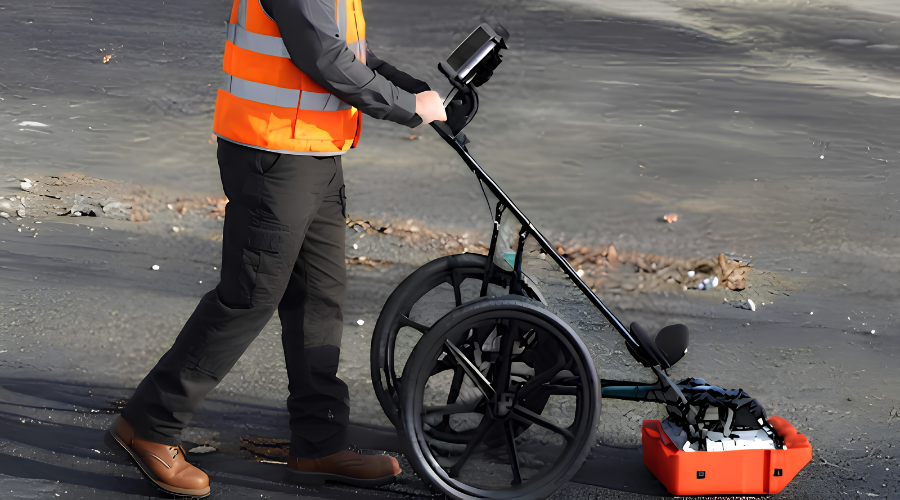
Calling 811 covers utilities owned by public providers up to the meter or service connection, but it doesn’t cover the private lines running from that point into your home, yard, or across your property. This is where private utility locating becomes essential, especially for irrigation lines, private lighting circuits, septic connections, or utilities installed by a previous owner without permits on file.
Situations where private utility locating fills the gap:
- Sprinkler or irrigation lines installed after the home was built
- Low-voltage lighting or camera wiring run by a previous contractor
- Additions, pools, or sheds where old conduit was never mapped
- Commercial properties with utilities crossing multiple structures
Because private lines rarely show up on 811 tickets, property owners planning any excavation on private ground benefit from a dedicated scan before crews break ground.
How We Confirm What's Really Underground
At Trenchless Drilling, we don’t rely on paint marks alone before a bore. Our ground penetrating radar (GPR) services scan and map existing utilities directly on your property, confirming what 811 marked and catching what it didn’t. This step is built into every horizontal directional drilling, conduit installation, and sewer line replacement project we run.
We provide GPR scanning in Ocala and GPR utility locating in West Palm Beach, along with the same service across Tampa, Jacksonville, and Gainesville. Whether you’re installing conduit for an EV charger, running a new sewer line, or setting a handhole for fiber, our team locates and verifies utilities before any trenchless drilling or excavation begins, so the color-coded marks on your property become a confirmed plan instead of a guess.
Frequently Asked Questions
What color means electric line?
Red marks indicate electric power lines, cables, conduit, or lighting cables.
What color is used for gas lines?
Yellow marks indicate gas, oil, steam, or other flammable underground lines.
Does white paint mean a utility is buried there?
No. White marks show the proposed excavation boundary, not an existing utility.
How long do utility color code marks last?
Most paint marks remain visible for a few weeks, though weather and lawn care can fade them sooner.
Do utility color codes cover lines on my private property?
Not always. Public 811 locates typically stop at the meter or service point; anything beyond that may require private utility locating.
Is the utility color code system the same in every state?
Yes, nearly all U.S. states and their 811 centers follow the same APWA Uniform Color Code.
Final Thoughts
Understanding utility color codes gives property owners a clear, practical way to read what’s happening underground before any shovel hits the ground. Between calling 811 and, where needed, bringing in private utility locating or GPR scanning, you can plan any project with confidence instead of guesswork.
Contact Trenchless Drilling, LLC Today!
If you have a project coming up in West Palm Beach, Orlando, Ocala, or anywhere else across Florida, our team at Trenchless Drilling, LLC can locate, verify, and install with precision. Request a free estimate or call (305) 600-1734 to get started.