Calling 811 is free, and in most states it’s the law before you dig, but it only marks public utility lines up to your meter, not what’s buried on your side of the property. If your project goes beyond that point, you need private utility locating to find the irrigation lines, gas laterals, and low-voltage wiring that 811 was never designed to cover.
Property owners who assume “I called 811, I’m covered” are often the ones who end up with a damaged line and a surprise repair bill. Here’s exactly where 811 stops, and private GPR utility locating in Ocala picks up.
What Does 811 Actually Cover?
811 is the national call-before-you-dig hotline that notifies public utility companies of your planned excavation. It’s a great first step, but it has a hard boundary that catches a lot of property owners off guard.
- Marks public utility lines owned by the utility company, water mains, gas mains, electric, and telecom
- Locates are limited to the area from the street to your utility meter or point of service
- Technicians mark lines using flags or paint, following standardized utility color codes (red for electric, yellow for gas, blue for water)
- Free, but it does not cover your yard, driveway, or the space between structures on your property
- Markings fade within a few weeks, so a fresh ticket is needed for every dig, not just the first one
Private Utility Locating vs. 811: What’s the Real Difference?
Private utility locating picks up exactly where 811 leaves off; it’s a paid service that scans past the meter using ground-penetrating radar (GPR) and electromagnetic locating to find lines installed after the original utility hookup. Think of it this way: 811 answers “What does the utility company own?” while private locating answers “What’s actually under my property?”
- Cost: 811 is free; private locating is a paid service based on site size and scope
- Coverage: 811 stops at the meter; private locating covers everything from the meter to the structure, including irrigation, low-voltage lighting, and secondary electrical feeds
- Accuracy: 811 markings can rely on older utility maps; GPR-based private locating scans the actual ground in real time, working on soil, slabs, and paved surfaces alike
- Scope: 811 finds primary public utilities; private locating finds secondary and private lines never registered with the one-call system
- Liability: if a public line is hit after a completed 811 ticket, the utility is generally responsible; if a private line is hit, the property owner or contractor is on the hook
When Do You Actually Need Private Utility Locating?
Not every backyard project needs a full GPR scan, but a surprising number do. Here’s when property owners should budget for it rather than skip it.
- You're digging near a pool, outdoor kitchen, detached garage, or shed where private power or water lines may run
- Your property has been renovated or landscaped multiple times, meaning there could be undocumented lines
- You're planning a bore or trench crossing from the main structure to any secondary structure on the lot
- You're a commercial property manager or condo association where shared utility runs between buildings are common
How Does GPR-Based Private Locating Work On-Site?
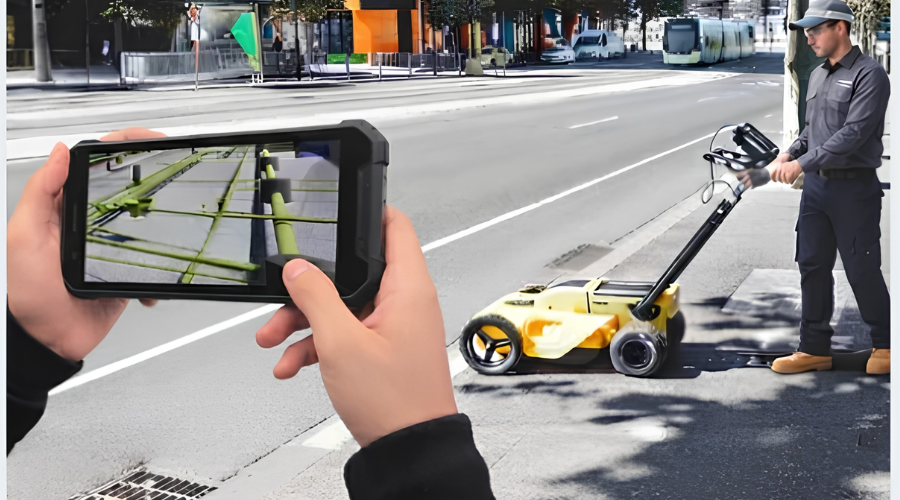
Ground-penetrating radar is the tool most private locators reach for because it doesn’t require the line to be metallic or connected to a tracer wire. A crew walks the site with a radar unit, and the equipment reads subsurface reflections in real time.
- The unit sends radar pulses into the ground and reads the signal that bounces back off pipes, cables, voids, or soil changes
- Data displays on a field tablet immediately, so the crew can flag lines on-site rather than waiting for lab results
- Scans typically reach depths of several feet, enough to catch most residential and light commercial utility runs
- Results can be exported for CAD or GIS use, giving property owners a permanent record of what's underground
- This is the same process behind our GPR utility locating West Palm Beach and Ocala projects, scanning ahead of every bore
What Happens If You Skip It?
Skipping private locating doesn’t just risk a cut line; it risks the whole project timeline and budget. A single missed private utility can undo the savings of skipping the scan in the first place.
- Damaged lines mean unplanned repair costs, on top of the original digging project's budget
- A hit on a gas or electrical line on private property is a liability the homeowner or contractor carries, not the utility company
- Utility strikes cause project delays while repairs are made and inspections are rescheduled
- Emergency repairs to torn-up landscaping or driveways often cost more than the locate would have upfront
- Working with experienced underground utility contractors in Orlando , property owners already trust that the locate, bore, and repair are handled by one team
FAQs: Private Utility Locating vs 811
Do I still need to call 811 if I'm hiring a private locator?
Yes. 811 remains required by law in most states and is still the fastest way to get public utilities marked for free. Private locating adds to that step; it doesn’t replace it.
Is private utility locating expensive?
Pricing depends on site size and scan depth, but it’s minor compared to repairing a struck line or losing days to project delays.
Can private locators find plastic or non-metallic pipes?
Yes. GPR-based locating detects both metallic and non-metallic lines, including PVC and HDPE, as long as there’s contrast with the surrounding material.
Does private locating work under concrete?
Yes. GPR scanning is commonly used on slabs, driveways, and parking lots to detect conduits, rebar, and voids before coring or drilling.
Conclusion
811 is the required first call, but it was never built to protect the private side of your property. Pairing that free public locate with a professional GPR scan is what actually closes the gap, the same standard Trenchless Drilling, LLC follows on every bore and conduit install across Florida. If you’re planning a dig, request a free estimate, and we’ll walk you through it.
Get a Free GPR Utility Locate Before You Break Ground
811 covers the public side; we cover the rest. Our GPR crews scan your property before any bore, trench, or dig begins, so every irrigation line, gas lateral, and buried cable is mapped before it becomes a repair bill. Whether you’re a homeowner, contractor, or property manager, we’ll walk your site and show you exactly what’s underground. Request a free estimate or call us directly at (305) 600-1734.