
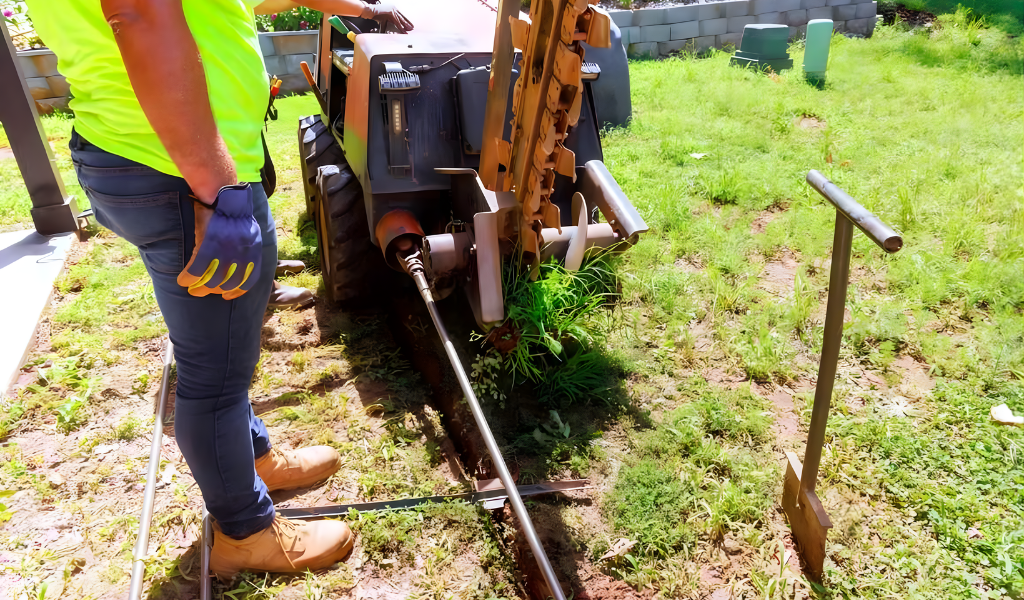
Running conduit under a driveway without digging is done using trenchless methods like horizontal boring or directional drilling that create an underground path without breaking concrete. The safest and most effective way is to use trenchless utility installation techniques that protect your driveway, prevent structural damage, and ensure long-term durability.
If you’re planning to install electrical or utility lines across your property, cutting through your driveway is expensive, messy, and often unnecessary. Modern trenchless technology allows you to install conduit cleanly beneath the surface. In this guide, you’ll learn exactly how to run conduit under a driveway, when DIY methods fail, and why professional solutions deliver better results for long-term reliability.
What Is the Best Way to Run Conduit Under a Driveway?
The most effective method is trenchless utility installation, which avoids surface damage entirely. Instead of digging trenches, specialized equipment creates a tunnel beneath the driveway and installs the conduit safely.
This approach is preferred because it:
- Keeps your driveway intact
- Reduces restoration costs
- Minimizes disruption to your property
- Delivers faster completion
Unlike traditional trenching, trenchless methods focus on precision underground rather than destruction above ground.
How Does Trenchless Conduit Installation Actually Work?
The process may sound complex, but it follows a clear and efficient sequence.
First, small entry and exit points are created on both sides of the driveway. These are not trenches but controlled access areas. Then, specialized drilling equipment is used to create a path beneath the driveway without disturbing the surface.
Once the bore path is complete:
- The conduit is carefully inserted through the tunnel
- Alignment is checked for accuracy
- Soil is stabilized to support the structure
This ensures the conduit remains secure and protected for years.
What Methods Are Used to Bore Under a Driveway?
There are two main trenchless methods used in real-world projects:
1. Horizontal Boring
This method is ideal for straight paths under driveways. A boring tool pushes through the soil while maintaining a consistent level. It’s simple in concept but requires precision to avoid misalignment.
2. Directional Drilling
This is a more advanced technique used in professional trenchless utility installation. It allows controlled drilling with guided direction, making it perfect for longer distances or complex underground conditions.
In both cases, the goal is the same: create a clean underground path without damaging the driveway above.
Can You Do It Yourself or Should You Hire Professionals?
This is one of the most common questions, and where many projects go wrong.
DIY might work if:
- The distance is very short
- Soil is soft and easy to penetrate
- No existing utilities are present
However, real-world conditions are rarely that simple.
Professional installation is recommended when:
- The driveway is concrete or reinforced
- The bore length is significant
- Precision is required for the electrical conduit
- You want guaranteed long-term results
DIY attempts often fail due to a lack of proper equipment, leading to uneven tunnels or collapsed pathways.
Why Is This Different from How to Bore Under a Sidewalk?
Many people compare this process to how to bore under a sidewalk, but there are important differences.
Driveways are:
- Thicker and more reinforced
- Subject to heavier loads (vehicles)
- More sensitive to structural damage
Because of this, driveway conduit installation requires more advanced equipment and greater precision than sidewalk boring.
What Is Trenchless Utility Installation and Why Does It Matter?
Trenchless utility installation is a modern approach to installing underground systems without open excavation.
Instead of digging long trenches, this method focuses on targeted underground work. It is widely used for:
- Electrical conduit installation
- Utility line placement
- Infrastructure upgrades
The major advantage is that it eliminates surface damage while maintaining high installation quality.
What Problems Can Happen If It’s Done Incorrectly?
Improper installation can create serious issues that are expensive to fix later.
Some common problems include:
- Driveway cracking or sinking
- Misaligned conduit paths
- Blockages inside the conduit
- Water drainage complications
These risks increase significantly when using improper tools or guessing the underground path.
How Long Does the Process Take?
One of the biggest advantages of trenchless methods is speed. Typical timelines:
- Small residential jobs: a few hours
- Medium projects: same-day completion
- Complex installations: 1–2 days
Compared to traditional digging, this saves both time and labor.
Is Trenchless Installation More Expensive?
At first glance, trenchless methods may seem more costly. However, when you factor in the cost of breaking and repairing a driveway, it becomes the more economical choice.
You avoid:
- Concrete removal and replacement
- Landscape damage
- Extended labor costs
In most cases, trenchless installation provides better value over time.
When Should You Consider Professional Conduit Installation?
You should strongly consider professional services if your goal is durability and zero damage.
Situations where professionals are the better choice:
- Installing electrical conduit under concrete
- Running conduit over longer distances
- Working in areas with unknown underground utilities
Services like conduit installation Orlando and underground electrical conduit installation Ocala are specifically designed to handle these challenges with precision and safety.
Why Trenchless Methods Are the Smart Choice Today
Modern property owners prefer trenchless solutions because they combine efficiency with reliability.
Key advantages include:
- No digging or surface damage
- Clean and precise installation
- Faster project completion
- Long-lasting results
This method is now considered the standard for underground conduit installation in residential and commercial settings.
What is the safest way to run conduit under a driveway?
The safest method is trenchless drilling, which avoids damaging the driveway surface.
Can conduit be installed without removing concrete?
Yes, trenchless methods allow installation without breaking or removing concrete.
How deep should conduit be installed?
Typically between 18–24 inches, depending on project requirements and local codes.
Is directional drilling better than horizontal boring?
Directional drilling offers more control and is better for complex or longer installations.
Do I need permits for conduit installation?
In many areas, yes, especially for electrical conduit. Always check local regulations.
Final Thoughts
Running conduit under a driveway without digging is not only possible; it’s the preferred method today. Trenchless solutions like horizontal boring and directional drilling allow you to complete the job without damaging your property, saving both time and money.
Get Expert Trenchless Installation Today!
If you want a clean, damage-free solution backed by precision and experience, explore professional trenchless options today. Visit Trenchless Drilling, LLC to get started with a reliable conduit installation solution tailored to your project.