
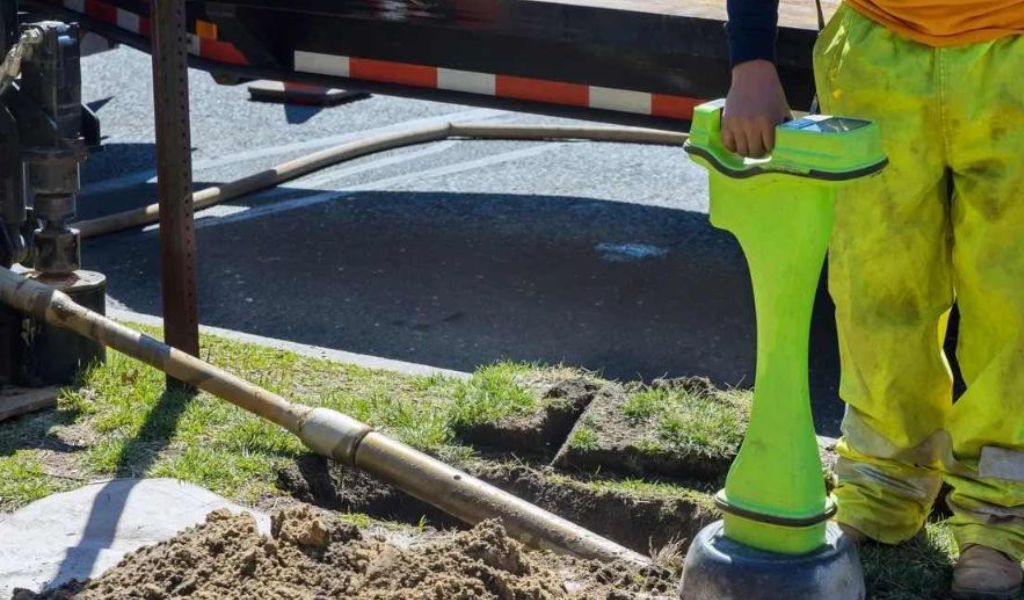
The best way to bore under a sidewalk is to use a pneumatic boring missile or horizontal directional drill. These trenchless methods push a tool through the soil beneath the concrete, creating an underground path for pipes or conduit. The sidewalk stays completely untouched. No cutting, no cracking, no concrete repairs afterward. Most sidewalk bores take less than an hour for a trained crew. The method works for water lines, electrical conduit, gas lines, irrigation pipes, fiber optic cable, and sewer connections. Property owners across Florida use sidewalk boring when they need to run utilities from one side of a walkway to the other without tearing anything apart. In this blog, we will learn how to bore under a sidewalk and how a professional crew is the best option.
Why Would You Need to Bore Under a Sidewalk?
Sidewalks sit between your property and the street. Every utility connection that runs from a public main to your house has to cross that sidewalk somewhere. Water lines, sewer pipes, electrical conduit, gas lines, and communication cables all need a clear path underneath.
Cutting a sidewalk open creates problems. The concrete must be removed, the trench dug, the pipe laid, the trench filled, and then new concrete poured. That process costs more, takes longer, and often leaves a patched section that never quite matches the original surface. In many Florida cities, you also need a separate permit to cut public sidewalks, and the city may require you to replace the entire panel rather than just the section you cut.
Boring avoids all of that. The crew digs a small pit on each side of the sidewalk, bores a tunnel underneath, pulls the pipe through, and fills the pits. The whole process is faster, cheaper, and leaves no visible trace on the walking surface.
What Methods Are Used to Bore Under a Sidewalk?
Three trenchless methods handle sidewalk crossings. The right choice depends on the distance, soil type, pipe size, and what’s already buried nearby.
Pneumatic boring missile. This is the most common method for sidewalk crossings. A missile bore is a compressed-air-powered tool shaped like a torpedo. It punches through the soil in a straight line, creating a tunnel just wide enough for the pipe. Most sidewalk bores are 4 to 15 feet long, and a missile boring in the Ocala crew can finish one in 15 to 45 minutes. The tool works especially well in Florida’s sandy soil. It’s affordable, fast, and requires very little space to set up.
Horizontal directional drilling (HDD). For longer runs or when the bore path needs to curve around existing utilities, HDD is the better option. A steerable drill head follows a planned path underground while a locator tracks its position from the surface. HDD is common for sidewalk crossings that are part of a larger project, like running a conduit from the street to a building 100 feet away.
Auger boring. A rotating auger cuts through the soil and removes it as it advances. This method works well in clay or mixed soils where a pneumatic missile might struggle. It’s less common for standard sidewalk crossings, but useful in specific ground conditions.
Step-by-Step: How a Sidewalk Bore Gets Done
A professional sidewalk bore follows a clear sequence. Each step protects the surface and the buried utilities around it.
Step 1: Locate existing utilities. Before any boring starts, the crew calls Sunshine 811 (Florida’s free utility locate service) and may also run a ground-penetrating radar scan to confirm what’s already underground. Hitting a gas line, water main, or fiber cable during a bore can cause serious damage and liability.
Step 2: Dig entry and exit pits. Small holes are dug on both sides of the sidewalk. Each pit is typically 2 to 3 feet wide and deep enough to reach the required pipe depth. The sidewalk itself is never touched.
Step 3: Bore the tunnel. The underground missile-boring Orlando tool, or drill head, enters the ground from the entry pit and travels beneath the sidewalk to the exit pit. The operator controls the direction and depth throughout the bore.
Step 4: Pull the pipe or conduit. Once the tunnel is complete, the new pipe is attached and pulled back through. For electrical work, contractors often install conduit first, then pull wires through later. If you need to run conduit under a driveway or walkway, this same method applies.
Step 5: Backfill and clean up. The entry and exit pits are filled and compacted. The sidewalk surface remains exactly as it was before the work started. No patches, no cracks, no uneven sections.
What Types of Utilities Can Be Installed Under a Sidewalk?
Sidewalk boring handles nearly every type of residential and commercial utility. The most common installations include water supply lines from the main to the house, sewer connections for new builds or replacements, electrical conduit for power service upgrades, gas lines for new meters or appliance hookups, irrigation pipes for sprinkler systems, and fiber optic or communication cables for internet and phone service.
The pipe size determines the bore diameter needed. A 1-inch water line requires a smaller bore than a 4-inch sewer pipe. The crew sizes the bore based on the specific pipe material and diameter for your project.
How Much Does It Cost to Bore Under a Sidewalk?
Most sidewalk bores in Florida cost between $200 and $800 for a standard residential crossing. The exact price depends on the distance (typically 4 to 15 feet), pipe diameter, soil conditions, and whether utility locating is needed beforehand.
Compare that to cutting and replacing a sidewalk section: concrete removal runs $500 to $1,500, and new concrete costs another $800 to $2,000, depending on the panel size. Boring saves money on the installation itself and eliminates the restoration costs entirely.
Common Mistakes to Avoid When Boring Under a Sidewalk
Skipping the utility locate is the biggest risk. A single strike on a buried gas line or fiber cable can cost thousands in repairs and create safety hazards. Always call 811 and consider a professional GPR scan for high-traffic utility areas.
Choosing the wrong method also causes problems. A DIY water jet approach might work for a short irrigation line under a narrow walkway, but it’s unreliable for anything larger. The soil can collapse around the pipe, the alignment can drift off course, and you may end up with a failed installation that needs to be redone by a professional crew anyway.
Boring, too shallow, is another common error. If the tunnel runs too close to the bottom of the concrete, ground settling over time can cause the sidewalk to crack or sink. Experienced trenchless utility installation contractors know the right depth for Florida soil conditions and local code requirements.
Frequently Asked Questions
Can you bore under a sidewalk without cracking it?
Yes. Pneumatic boring missiles and HDD equipment travel through the soil beneath the concrete. The sidewalk surface is never touched during the process.
How long does it take to bore under a sidewalk?
Most residential sidewalk bores take 15 to 45 minutes for the bore itself. Including setup, utility locating, and cleanup, the full job usually finishes within 2 to 3 hours.
Do I need a permit to bore under a sidewalk in Florida?
It depends on your city and county. Many Florida municipalities require a right-of-way permit for work near public sidewalks. Your contractor should handle the permit process before work begins.
What is the difference between missile boring and directional drilling for sidewalk crossings?
A missile bore uses compressed air to punch a straight tunnel. It’s best for short, direct crossings under 100 feet. Directional drilling uses a steerable drill head and works better for longer distances or curved paths around existing utilities.
Conclusion
Boring under a sidewalk is an efficient, non-invasive technique for installing utilities such as water lines, sewer pipes, and electrical conduits. Methods like pneumatic missile boring, horizontal directional drilling (HDD), and auger boring preserve the sidewalk’s integrity, saving time and money compared to traditional trenching. The process is faster, safer, and more cost-effective for property owners.
Need To Bore Under A Sidewalk For A Utility Project?
Trenchless Drilling, LLC provides sidewalk boring, missile boring, and directional drilling services across West Palm Beach, Orlando, and Ocala. We handle utility locating, permits, and installation in one visit and you also won’t have to be worried about how to run conduit under driveway. Call us or request a free estimate to get your project started.