
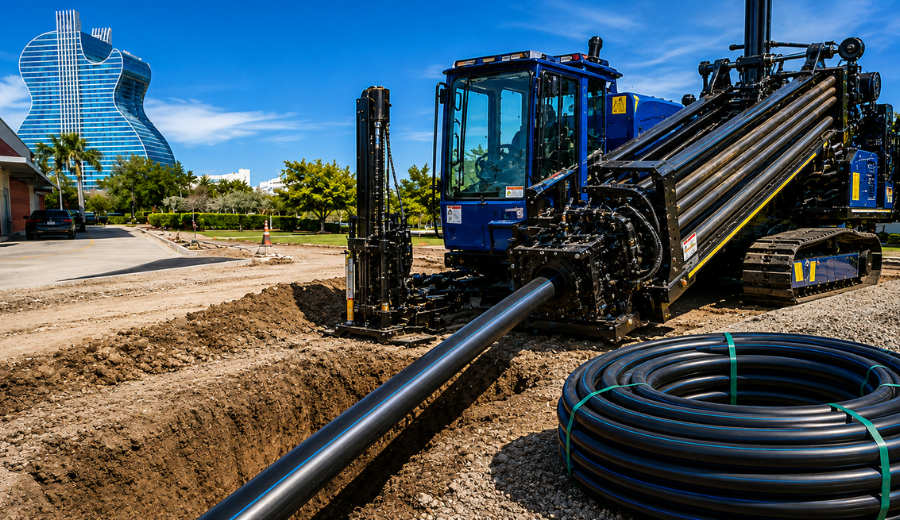
HDPE pipe is high-density polyethylene pipe, a flexible, corrosion-resistant plastic pipe used for water, sewer, gas, electrical, and telecom lines because it can be heat-fused into one continuous, leak-free run with no couplings. It’s become the standard choice for trenchless installations like horizontal directional drilling because it bends without breaking and holds up for decades underground.
If you’ve had a contractor recommend HDPE for your water line, sewer replacement, or conduit project, it helps to understand exactly what makes this material different from PVC or metal pipe and why it matters for anything installed underground. This guide covers what HDPE pipe is, how it’s joined, and where it fits into a typical trenchless project.
What Is HDPE Pipe Made Of?
High-density polyethylene is a thermoplastic material, meaning it can be melted and rejoined without losing strength, which is the entire reason it works so well underground. It’s manufactured in long coils or straight lengths and rated by pressure class and wall thickness for different applications.
Here’s what defines the material:
- Made from high-density polyethylene resin, a durable, flexible thermoplastic
- Resistant to corrosion, rust, and chemical degradation, unlike metal pipe
- Manufactured in various diameters and pressure ratings for water, sewer, and gas use
- Flexible enough to bend around curves without fittings or joints breaking
Why Is HDPE Pipe Used for Trenchless Installation?
Trenchless methods like horizontal directional drilling pull pipe through an underground bore path, which puts real tension and bending stress on the material. HDPE is uniquely suited to this because it can flex through curves and withstand pulling force without cracking. This is why directional drilling contractors and trenchless utility specialists rely on it for water, sewer, and conduit installations.
- Bends around the curved path created by a directional drill without breaking
- Withstands the tension of being pulled through a bore over long distances
- Creates a continuous pipeline with no couplings that could separate underground
- Performs reliably in Florida's shifting sandy soil and high water tables
How Are HDPE Pipe Sections Joined Together?
HDPE pipe sections aren’t glued or threaded together the way PVC or metal pipe often is. Instead, they’re joined using a process called heat fusion, which melts the pipe ends and presses them together to form a single, seamless piece. Specialized fusion equipment and trained technicians are used to ensure every joint meets industry standards for strength and long-term performance.
The fusion process generally follows these steps:
- Site evaluation. Soil type, safety requirements, and utility locations are assessed to plan the fusion setup.
- Pipe preparation. Each section is cleaned, trimmed, and aligned to precise measurements before fusing.
- Heating and fusion. The pipe ends are heated to a controlled temperature, pressed together, and held under pressure.
- Cooling and inspection. The joint cools into a permanent bond, then is visually inspected and pressure-tested.
- Pull-in and installation. The fused, continuous HDPE pipeline is pulled through the bore and connected to the system.
What Makes a Fused HDPE Joint Different From Other Pipe Connections?
A properly fused joint isn’t just attached to the pipe; it becomes part of the pipe, which is what sets HDPE pipe fusion apart from couplings, glue joints, or threaded fittings used with other materials. This is one of the biggest reasons contractors prefer it for trenchless work.
- The fused joint is as strong as the pipe itself, with no weak point at the connection
- There are no couplings or fittings that can loosen, corrode, or leak over time
- Long continuous lengths can be pulled through a bore with minimal risk of separation
- Our crews use professional-grade fusion equipment and trained technicians to prepare every joint before installation
Where Is HDPE Pipe Used?
HDPE pipe shows up across a wide range of underground utility projects, largely because the same material performs well whether it’s carrying water, gas, or protecting fiber cable. Its flexibility and joint strength make it a fit for both residential and larger commercial installations.
- Common uses for HDPE pipe for water lines in both new construction and replacement projects
- Sewer line installation and replacement, especially through trenchless boring methods
- Electrical and telecom conduit protection for buried cable runs
- Gas distribution lines, where leak-free joints are especially critical
Is HDPE Pipe a Good Choice for Water Lines?
For most residential and commercial water line projects, especially those installed with trenchless methods, HDPE is one of the most reliable materials available. Its resistance to corrosion and its leak-free fused joints are the two biggest reasons it holds up better than older pipe materials over time.
- Doesn't corrode or rust the way older metal water lines eventually do
- Fused joints eliminate the leak points common with coupled or threaded pipe
- Flexes with soil movement instead of cracking under pressure or settling
- Well suited to Florida's sandy soil conditions and fluctuating water tables
How Long Does HDPE Pipe Last Underground?
HDPE pipe is built for long-term underground service, which is part of why utilities and municipalities have adopted it so widely for water, sewer, and gas systems. Properly fused and installed HDPE typically outlasts the pipe materials it’s replacing.
- Rated for service life often exceeding 50 years under normal conditions
- Resistant to the corrosion and scaling that shortens the life of metal pipe
- Fused joints don't degrade or loosen the way mechanical couplings can over decades
- Performs consistently in both wet and shifting soil conditions common across Florida
How We Use HDPE Fusion for Directional Drilling
Trenchless Drilling, LLC uses HDPE pipe for water, sewer, electrical, and telecom projects across Florida, fusing it in-house before it’s pulled through a horizontal directional drill or installed through another trenchless method. Our crews use professional-grade fusion machines to create seamless, leak-free joints for residential, commercial, and municipal work.
We bring this same fusion expertise to every directional drilling project, with capabilities across West Palm Beach, Tampa, Jacksonville, and Gainesville. Whether your project needs a single fused run for a driveway crossing or a long continuous pipeline for a commercial installation, our team handles the HDPE preparation and fusion as part of the overall directional drilling process, from site evaluation through final testing.
Frequently Asked Questions
What does HDPE stand for?
HDPE stands for high-density polyethylene, a flexible, corrosion-resistant thermoplastic pipe material.
Why is HDPE pipe used for horizontal directional drilling?
Its flexibility and fused joints allow it to bend through a curved bore path and withstand pulling tension without breaking or leaking.
How is HDPE pipe joined together?
Sections are joined through heat fusion, a process that melts and presses the pipe ends together to form a single, seamless connection
Is HDPE pipe better than PVC for underground installation?
HDPE offers greater flexibility and leak-free fused joints, making it especially well suited for trenchless installation, while PVC relies on solvent-welded or threaded joints that can be more prone to failure over time.
How long does HDPE pipe last?
Properly installed HDPE pipe typically has a service life exceeding 50 years under normal underground conditions.
Can HDPE pipe be used for both water and sewer lines?
Yes. HDPE is commonly used for potable water lines, sewer systems, gas distribution, and electrical or telecom conduit.
Final Thoughts
HDPE pipe has become the standard for trenchless installation because it combines flexibility, strength, and leak-free fused joints in a single material built to last for decades underground. It’s the reason we choose HDPE conduit over PVC for directional drilling projects — whether it’s a new water line, a sewer replacement, or conduit for a commercial build.
If you have a directional drilling project in West Palm Beach, Tampa, Jacksonville, or anywhere else in Florida, Trenchless Drilling can install your HDPE pipeline from start to finish. Request a free estimate or call (305) 600-1734 to get started.
Need HDPE Fusion for Directional Drilling?
Whether you’re installing a new water line, sewer system, or underground utility, HDPE conduit gives your project a seamless, leak-free line that holds up for decades. Trenchless Drilling, LLC, uses HDPE fusion as part of every directional drilling job across Florida, delivering pipelines built to last without the risk of joint failure down the road. Request a free estimate today or call (305) 600-1734 to discuss your project with our team