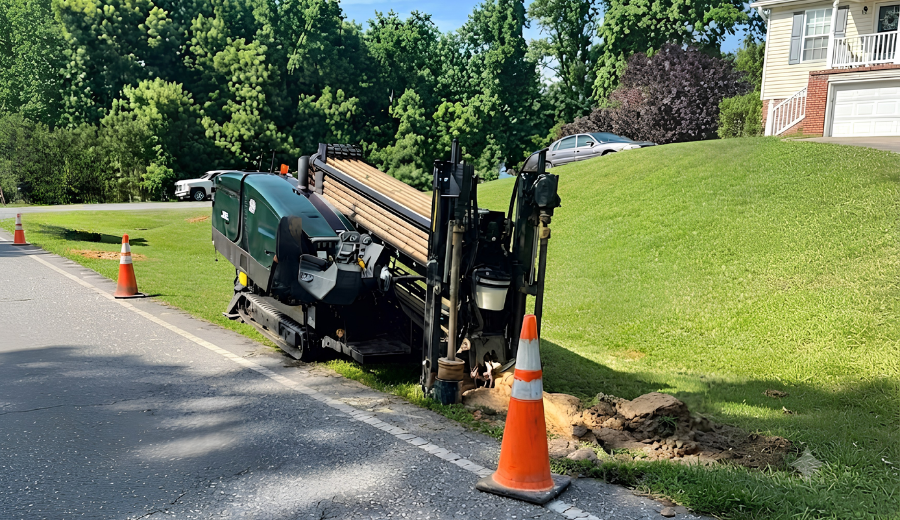
Boring under a road is a trenchless method that installs water, sewer, gas, electrical, or fiber lines beneath a street using a directional drill or pneumatic tool without cutting open the pavement. The process requires a right-of-way permit from the city or county, utility locating before any drilling starts, and a bore path planned to meet depth and casing requirements for the road above it.
If you’re a property owner, developer, or contractor facing a utility crossing beneath a public street, the permitting side can feel just as complicated as the drilling itself. This guide explains what the process actually involves, who issues the permits, and what to expect from the first phone call to final restoration.
What Does Boring Under a Road Actually Involve?
At its core, this process replaces open-cut excavation across a street with an underground tunnel created from small access pits on either side. The road surface itself is never cut, which is exactly why municipalities prefer this method for utility crossings.
Here’s what defines the process:
- Access pits are dug on both sides of the roadway, not a trench across it.
- A directional drill or pneumatic tool creates the underground path beneath the street.
- The new pipe, conduit, or cable is pulled through once the bore is complete.
- Traffic can often continue on the road throughout most of the work.
Do You Need a Permit to Bore Under a Road?
Yes, almost always. Because a public road falls under a city, county, or state right-of-way, any utility crossing beneath it typically requires a right-of-way permit before drilling can begin, and the requirements vary depending on jurisdiction.
Permit requirements commonly include:
- A right-of-way permit application submitted to the city, county, or Department of Transportation
- Engineering or site plans showing the bore path, depth, and road alignment
- Utility locate confirmation through Sunshine 811 before the application is finalized
- Bonding or insurance requirements for work performed in a public right-of-way
- Traffic control plans if lane closures or detours are needed during the bore
Because permit timelines and paperwork differ from one municipality to the next, working with a contractor who already handles this regularly saves significant back-and-forth. This is one of the biggest reasons property owners and developers bring in an experienced directional boring contractor in Ocala before scheduling any road crossings.
What Is the Step-by-Step Process for Boring Under a Road?
Once permitting is approved, the physical work follows a consistent sequence designed to protect both the road surface and the utilities already buried beneath it. Each step exists to reduce risk before the drill ever moves.
- Utility locating. Existing lines are marked through Sunshine 811, followed by on-site confirmation using locating equipment to catch anything the public locates missed.
- Site setup and access pits. Small pits are excavated on each side of the road to serve as the entry and exit points for the bore.
- Pilot bore. A directional drill or pneumatic missile creates the initial underground path, guided to the correct depth and alignment beneath the roadway.
- Backreaming and pullback, when needed. For larger pipe or conduit, the bore path is widened before the utility line is pulled through.
- Testing and restoration. Connections are tested, access pits are backfilled and compacted, and the road surface is inspected to confirm no disruption occurred.
Which Trenchless Method Is Used to Bore Under a Road?
The method chosen usually comes down to the length of the crossing and what’s already buried nearby. Two trenchless techniques cover most road-crossing projects. We provide HDD services in Orlando and across Florida and evaluate factors such as soil conditions, utility congestion, and crossing distance to determine the most suitable approach.
- Horizontal directional drilling (HDD): Uses a steerable drill head, making it the standard choice for longer or curved road crossings where the path needs to avoid existing utilities.
- Missile boring: A compressed-air tool suited to shorter, straight crossings, often used for smaller utility lines beneath narrower streets.
- Casing pipe installation: Larger road crossings sometimes require a protective casing pipe around the utility line, depending on road classification and depth requirements.
- Depth and cover requirements: Most municipalities require a minimum depth of cover beneath a roadway, which is confirmed during the permitting and engineering phase.
Choosing between these methods depends heavily on site-specific factors, which is why an experienced contractor typically evaluates soil conditions, crossing length, and nearby utilities before recommending directional drilling equipment or a pneumatic approach for a given street.
How Long Does It Take to Bore Under a Road?
Timing depends on the length of the crossing, the permitting process, and soil conditions, but the physical boring itself is usually the fastest part of the whole project. Permitting is often the longer lead time.
- Permit approval can take anywhere from a few days to several weeks, depending on the jurisdiction.
- Utility locating and site prep typically add another day before drilling begins.
- The actual bore for a standard residential or commercial road crossing is often completed within a single day.
- Restoration and testing are usually finished the same day the bore is completed, keeping total road disruption to a minimum.
Why Choose Trenchless Boring Over Open-Cut Excavation for a Road Crossing?
Open-cut excavation across a road means closing lanes, cutting pavement, and paying for full resurfacing once the utility is installed. Trenchless boring was developed specifically to avoid that level of disruption on public infrastructure.
- Keeps the road surface fully intact, avoiding pavement cutting and resurfacing costs
- Reduces or eliminates the need for lane closures and detours
- Shortens the overall project timeline compared to trenching and repaving
- Lowers the risk of striking existing utilities already buried beneath the roadway
- Meets the depth, casing, and inspection standards most municipalities require for road crossings
Where We Provide Road Boring Services
Trenchless Drilling, LLC handles road crossings for utility installations across Florida, managing the permitting, locating, and drilling in one coordinated project. Our crews work directly with city and county right-of-way offices to keep paperwork and scheduling on track before any equipment reaches the site.
We provide HDD services and directional boring and trenchless drilling in West Palm Beach along with the same road boring capabilities across Tampa, Jacksonville, and Gainesville. Whether the crossing calls for a longer HDD run or a shorter pneumatic bore, our team plans the path, secures the permit, and installs the utility with minimal disruption to traffic and the road above.
Frequently Asked Questions
Do I need a permit to bore under a road in Florida?
Yes. Most Florida cities and counties require a right-of-way permit before any utility crossing beneath a public road can begin.
What's the difference between HDD and pneumatic boring for a road crossing?
HDD uses a steerable drill head suited for longer or curved crossings, while missile boring works best for shorter, straight crossings beneath narrower streets.
How long does it take to get a road boring permit approved?
Approval times vary by jurisdiction but typically range from a few days to several weeks depending on the scope of the crossing.
Does a road crossing always require closing the street?
Not always. Many crossings are completed without full lane closures, though a traffic control plan may still be required by the permitting agency.
How deep does a utility need to be installed under a road?
Minimum depth requirements vary by municipality and are confirmed during the engineering and permitting phase of the project.
Can trenchless boring install multiple utility types under the same road?
Yes. Water, sewer, gas, electrical, and fiber lines can all be installed using directional boring, often within the same right-of-way corridor.
Final Thoughts
Boring under a road doesn’t have to mean months of permitting headaches or a torn-up street. With the right utility locating, a properly planned path, and an experienced trenchless contractor handling the paperwork, most crossings move from application to completed installation with minimal disruption to the road above.
If you have a road crossing project in West Palm Beach, Orlando, Ocala, or anywhere else in Florida, Trenchless Drilling, LLC can manage the permitting, locating, and boring from start to finish. Request a free estimate or call (305) 600-1734 to get started.
Need a Utility Line Installed Under a Road? We Can Help.
Planning a road crossing for water, sewer, gas, electrical, or fibre utilities? Trenchless Drilling LLC manages the entire process, from permits and utility locating to directional boring and final restoration. Our experienced team delivers safe, efficient installations with minimal disruption to traffic and your property. Contact us today for a free estimate and get your project started with confidence.