
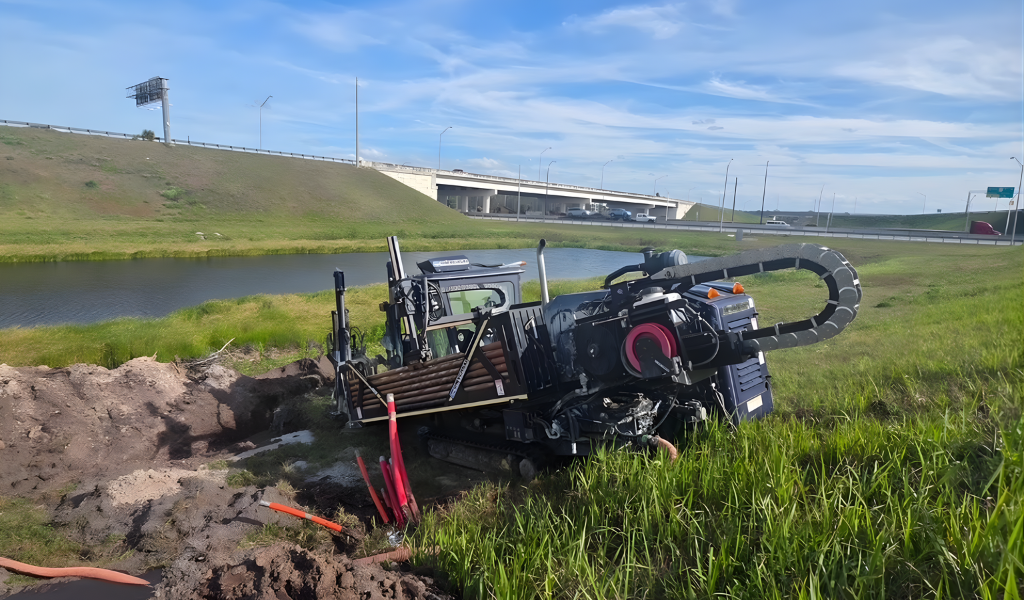
A directional bore can typically travel between 100 feet and over 5,000 feet, depending on soil conditions, equipment capacity, and project design. In large-scale infrastructure and energy projects, horizontal directional drilling (HDD) can even exceed 10,000 feet in length under specialized conditions.
Understanding how far can a directional bore go is critical for planning underground utility installations, especially when working around roads, rivers, urban areas, or environmentally sensitive zones. This guide explains real-world limits of directional boring, including distance, depth, cost factors, and technical constraints used across the United States.
What Is Directional Boring and Why Is It Used?
Before understanding distance limits, it’s important to understand what directional boring actually is and why it has become the preferred trenchless method for underground installation.
Directional boring, also known as horizontal directional drilling, is a trenchless construction method used to install underground utilities without open excavation. Instead of digging a long trench, a controlled drilling system creates a guided underground path between entry and exit points.
Why do industries use directional boring?
Directional boring is widely adopted because it minimizes surface disruption and allows installation in areas where traditional digging is not possible.
- It reduces damage to roads, landscaping, and structures
- It allows utility installation under rivers, highways, and railways
- It improves safety and reduces environmental impact
- It speeds up utility installation in congested urban areas
How Far Can a Directional Bore Go in Real Projects?
Now let’s answer the most important question: how far can a directional bore go in real-world conditions?
The answer depends heavily on equipment size, soil conditions, and project complexity, but typical ranges are well established in the industry.
Typical directional bore distance ranges
Most HDD projects in the USA fall within predictable distance categories based on application type and rig capability.
- Residential and light utility projects: 100 – 600 feet
- Standard commercial installations: 600 – 2,000 feet
- Large infrastructure projects: 2,000 – 5,000+ feet
- Specialized oil & gas HDD systems: 10,000+ feet
These numbers represent practical field conditions, not theoretical maximums.
In most utility installations, contractors prefer shorter, controlled bore lengths because they reduce risk, cost, and steering complexity.
What Is the Maximum Depth of a Directional Bore?
Distance is only one part of the equation. Depth plays an equally important role in determining the feasibility and safety of underground drilling.
So, how deep can a directional bore actually go underground?
Common depth ranges in HDD projects
Depth varies based on surface obstacles and underground conditions.
- Shallow utility installations: 10 – 50 feet deep
- Standard HDD installations: 50 – 200 feet deep
- Highway and river crossings: 200 – 500+ feet deep
- Specialized energy projects: 1,000+ feet (vertical depth cases)
Depth is usually determined by clearance requirements rather than drilling ability alone.
In most urban projects, engineers aim for the shallowest safe depth to reduce cost and drilling complexity while still avoiding existing utilities and surface disruptions.
What Factors Determine How Far a Directional Bore Can Go?
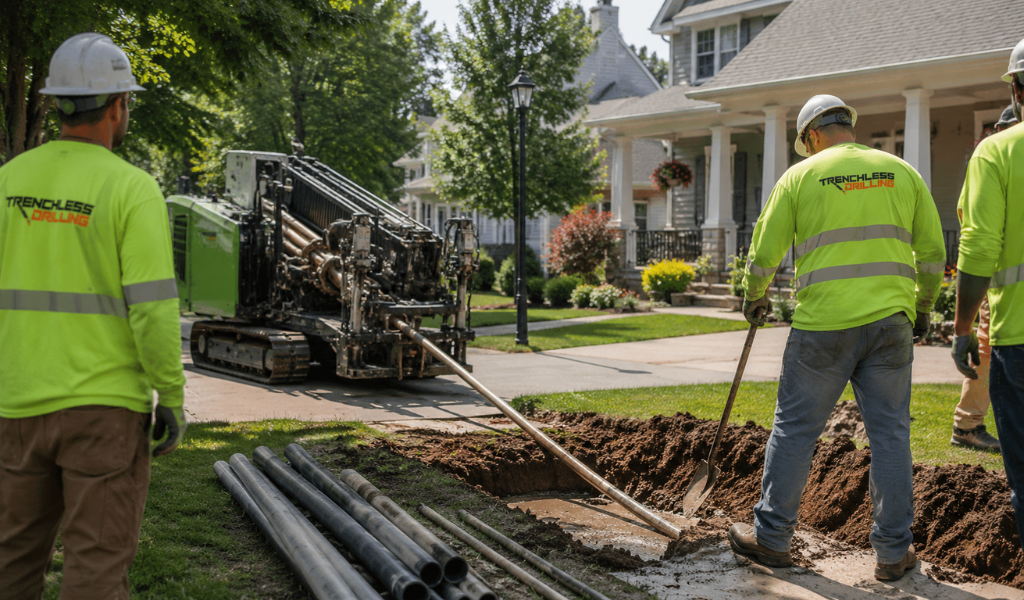
The actual bore distance is not fixed; it is influenced by multiple engineering and environmental factors that must be evaluated before drilling begins.
Soil conditions and ground stability
Soil type is one of the most important factors affecting drilling performance and bore length.
Soft clay allows smooth drilling over long distances, while rocky or mixed soils increase resistance and limit the achievable distance.
Equipment and rig capacity
The drilling rig itself determines how far the bore can go. Higher-capacity rigs can push longer distances with greater accuracy and pullback force.
Modern HDD rigs include advanced navigation systems that improve steering over long distances.
Pipe diameter and installation size
Larger pipelines require more force and drilling fluid pressure, which can reduce maximum bore length.
Smaller utility conduits can travel significantly farther than large-diameter pipelines.
Bore path design and curvature
The complexity of the underground path also matters. Tight curves or elevation changes reduce drilling efficiency and limit distance.
Straight, well-planned bore paths allow much longer installations.
How Soil Conditions Affect Directional Drilling Distance
Soil conditions directly impact drilling speed, stability, and maximum achievable length.
Understanding this helps engineers decide whether a project is feasible before drilling begins.
- Clay soil: ideal for long-distance boring with stable guidance
- Sandy soil: moderate difficulty, requires careful fluid control
- Rocky terrain: slow drilling, high wear on equipment
- Mixed formations: unpredictable and cost-intensive
Poor soil conditions are one of the biggest reasons bore length must be reduced in real-world projects. This is why our team conducts a site evaluation before every project — to assess your specific soil conditions and give you a realistic, accurate bore plan rather than a guess.
How Accuracy Is Maintained Over Long Distances
Navigation and tracking systems used in HDD
- Magnetic guidance systems
- Gyroscopic steering tools
- Real-time drilling head monitoring
How Directional Drilling Cost Changes with Distance
Cost is directly tied to bore length, making distance one of the most important budgeting factors in any HDD project.
As distance increases, so do operational requirements and risks.
Why do longer bores cost more
- Increased drilling time and labor
- Higher fuel and equipment usage
- More drilling fluid consumption
- Greater engineering complexity
This is why evaluating directional drilling cost alongside feasibility is essential before project execution.
In many cases, contractors optimize bore length to balance cost and performance rather than pushing maximum distance.
When Directional Boring Is Not the Best Option
While directional boring is highly effective, it is not always the right solution for every project.
Situations where HDD may not be ideal
- Extremely rocky or unstable ground
- Projects requiring extremely tight budgets
- Very short utility runs where trenching is cheaper
- Sites with limited entry and exit space
Where Directional Boring Is Most Commonly Used
Directional drilling is widely used across infrastructure development in the United States due to its versatility.
It is especially effective in:
- Highway and road crossings
- Urban utility upgrades
- River and canal installations
- Commercial development projects
- Suburban infrastructure expansion
- Specialized service areas such as Trenchless drilling Orlando for complex city installations
Frequently Asked Questions
How far can a directional bore go for utility installation?
Can directional drilling go under rivers and highways?
Yes, HDD services in Ocala, West Palm Beach, and Orlando are specifically designed for crossings under obstacles like rivers, highways, and railways.
What is the deepest directional bore possible?
Is directional boring cheaper than trenching?
Conclusion
Understanding how far can a directional bore go is essential for planning safe, efficient, and cost-effective underground utility installations. In most real-world applications, directional boring can reliably achieve 100 to 5,000 feet, with deeper and longer installations possible in specialized projects.
Depth typically ranges from shallow utility work at 10 feet to complex crossings exceeding 200 feet or more.
For engineers, contractors, and developers, directional boring remains one of the most reliable trenchless technologies available today, combining precision, efficiency, and minimal surface disruption.
Need Directional Boring? Talk to Florida HDD Experts Today
If you are planning a trenchless installation project and need expert guidance, professional HDD services in West Palm Beach, Ocala, and Orlando can help evaluate feasibility, cost, and execution strategy.
Visit Trenchless Drilling, LLC to explore reliable directional drilling solutions for your next project.