
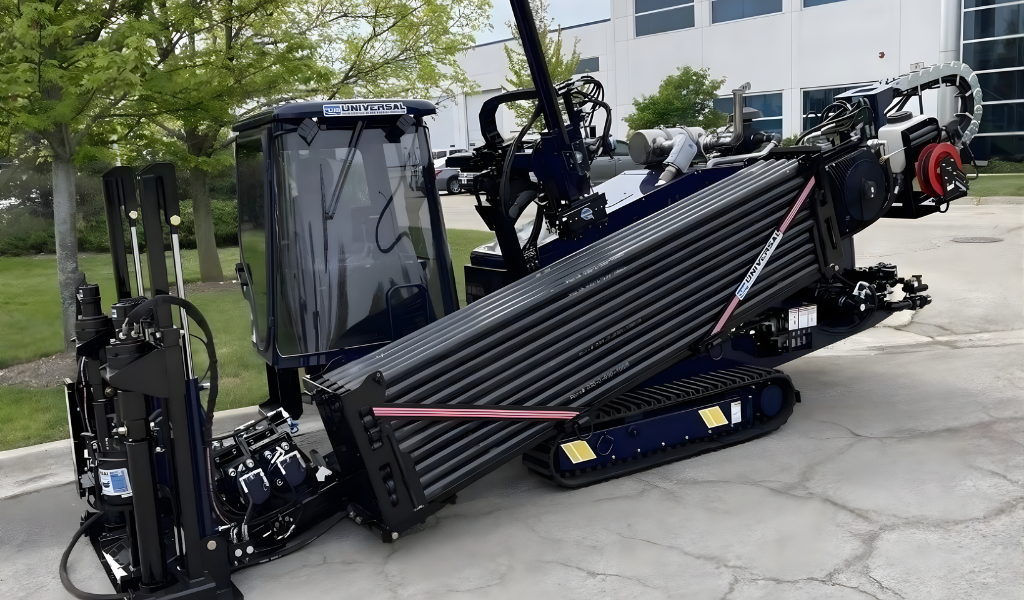
Directional boring is a trenchless method of installing underground pipes, conduits, and cables without digging open trenches across your property. A surface-launched drill rig pushes a steerable drill head beneath driveways, roads, sidewalks, and landscaping, then pulls the new pipe or conduit back through the path it created. The entire process takes hours instead of days and leaves your yard, driveway, or parking lot intact.
At Trenchless Drilling, LLC, we’ve completed thousands of directional bores and HDD services across West Palm Beach, Orlando, and Ocala over the past 20+ years. Our crews handle everything from 50-foot residential driveway crossings to 500-foot commercial utility runs under busy Florida roads. The method works for water lines, sewer pipes, electrical conduit, gas lines, fiber optic cables, and telecom infrastructure.
Most homeowners and contractors we talk to have the same three questions: how does it actually work, what does it cost, and when should you choose boring over traditional trenching? This guide answers all three.
What is Directional Boring?
Directional boring is a trenchless method of installing underground pipes, conduits, and cables without digging open trenches across your property. It is also commonly known as horizontal directional drilling and is often used for utility installations under roads, driveways, sidewalks, and landscaping.
How Does Directional Boring Work?
The process follows four steps. Each one happens in sequence, and a typical residential bore in West Palm Beach finishes in 2 to 6 hours.
Step 1 — Site inspection and utility locating.
Before our drill rig touches the ground, we call Sunshine 811 to mark all existing underground utilities. On complex jobs, we run our own ground penetrating radar (GPR) scan to confirm exact depths and locations. Skipping this step is the single biggest cause of utility strikes during underground work.
Step 2 — Drilling the pilot hole.
Our operator launches a small-diameter drill head into the ground at a shallow angle. The head has a built-in sonde, a transmitter that sends real-time location data to a handheld receiver above ground. A crew member walks the bore path with that receiver, telling the operator exactly where the drill head is and which direction to steer. The drill head cuts through soil, sand, and soft limestone while drilling fluid (a water-and-bentonite mix) keeps the bore stable and flushes out cuttings.
Step 3 — Reaming the bore.
Once the pilot hole exits at the target point, we remove the drill head and attach a back reamer, a larger cutting tool. We pull the reamer back through the pilot hole, widening it to fit the pipe or conduit that needs to go in. For a standard 2-inch electrical conduit, the bore might be opened to 4 inches. For a 6-inch water main, we ream to 10 or 12 inches.
Step 4 — Pulling the product.
The new pipe gets attached behind the reamer and pulled back through the enlarged bore in one smooth pass. The pipe enters from one end, travels underground along the bore path, and exits at the other. Once connections are made at both ends, the job is done. No open trench. No torn-up driveway. No weeks of restoration.
How Much Does Directional Boring Cost?
Pricing depends on three things: bore length, pipe diameter, and soil conditions.
For residential projects, most trenchless drilling in Orlando and West Palm Beach projects run between $6 and $15 per foot for standard 2-inch conduit in sandy soil. A typical 100-foot driveway crossing costs between $800 and $1,500, far less than the $3,000 to $5,000 you’d spend on trenching, concrete demolition, and restoration.
Larger commercial jobs, say, a 300-foot bore under a parking lot with 4-inch HDPE pipe, typically cost between $12 and $25 per foot. Limestone and rock conditions push pricing higher because they require special drill heads and slower progress.
Here’s a rough breakdown of the common directional drilling cost:
| Project Type | Typical Length | Pipe Size | Estimated Cost |
|---|---|---|---|
|
Driveway crossing (residential) |
40-80 ft |
2″ conduit |
$400 – $1,200 |
|
Water line (street to house) |
60-150 ft |
1″ – 2″ PE |
$900 – $2,500
|
|
Road crossing (commercial) |
80-200 ft |
4″ HDPE |
$1,500 – $5,000 |
|
Fiber optic run (commercial) |
200-500 ft |
2″ – 4″ conduit
|
$3,000 – $8,000 |
These are estimates. Rocky soil in areas like Ocala and parts of Palm Beach County can increase costs for trenchless construction Ocala projects because they require special drill heads and slower progress. We provide free on-site estimates for every project because bore conditions vary from one property to the next.
When Should You Choose Directional Boring Instead of Trenching?
Not every project needs boring. Short, shallow utility runs in open dirt, like a 20-foot irrigation line across a bare lot, are often cheaper with a simple trench. Directional boring is one of the most effective trenchless technology methods for installing utilities under driveways, sidewalks, and roads.
But directional boring wins in specific situations. Use it when the utility path crosses under a driveway, sidewalk, road, or any concrete surface you don’t want to cut and repair. It also wins when mature trees, expensive landscaping, or a client’s business operations would be disrupted by open trenching.
Here’s a practical rule our crews use: if the utility crosses under anything you’d have to demo and rebuild, boring is almost always faster and cheaper than tearing it up and putting it back together. A new concrete driveway costs $3,000 to $8,000 to pour. A bore under that same driveway costs $400 to $1,200.
Boring is also the only option for many municipal and HDD services projects, road crossings, waterway crossings, and jobs in congested utility corridors where open-cut permits either take months or aren’t issued at all.
What Types of Pipes and Conduits Can Be Installed With Directional Boring?
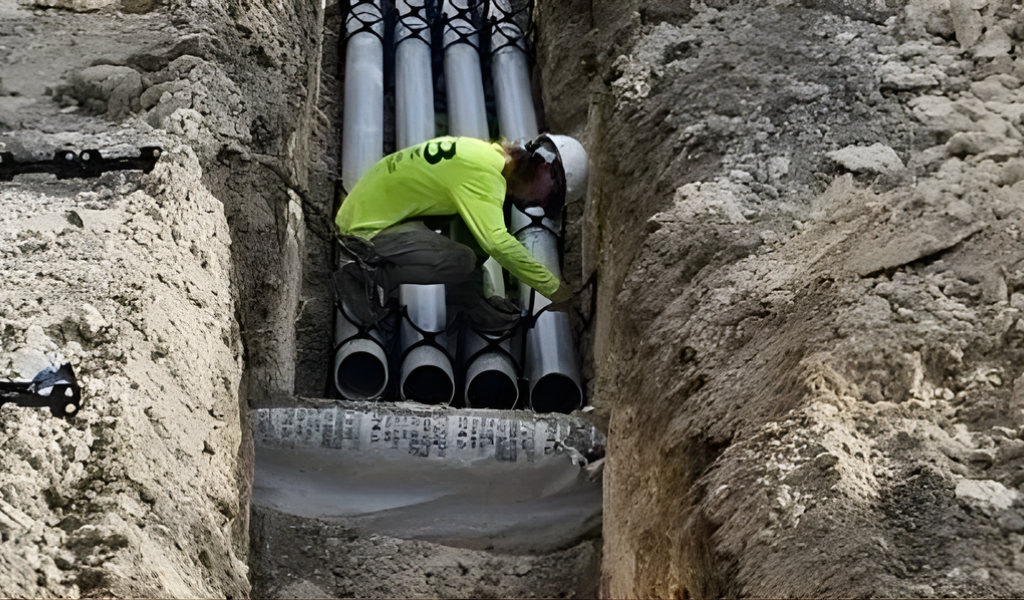
Directional boring handles most pipe materials used in underground construction. The most common ones we install across Florida include HDPE (high-density polyethylene), PVC, ductile iron, and steel casing pipe.
HDPE pipe is the go-to material for HDD projects because it’s flexible enough to bend through the bore path and strong enough to handle the pulling forces during installation. We fuse HDPE sections together on-site using butt fusion welding, which creates a single continuous pipe with no joints, meaning no leak points underground.
PVC conduit works well for shorter electrical and telecom runs. For sewer and water mains, ductile iron inside a steel casing is common on road crossings where municipal codes require it.
Frequently Asked Questions
How long does a directional bore take?
Most residential bores take 2 to 6 hours. Commercial projects with longer runs or harder soil may take 1 to 3 days.
Will directional boring damage my driveway or yard?
No. The drill enters and exits through small pits at each end. The surface between those points stays untouched.
How deep does a directional bore go?
Typical residential bores run 3 to 6 feet deep. Commercial and road crossings can reach 15 feet or more, depending on existing utility depths.
Do I need a permit for directional boring in Florida?
Most projects in Palm Beach County, Orange County, and Marion County require a right-of-way permit if you’re boring under a public road or sidewalk. Residential bores on private property usually need only a standard building permit.
What soil conditions does directional boring work in?
Sandy soil (common in West Palm Beach and Orlando), clay, and soft limestone all work well. Hard limestone and coral rock require specialized rock-cutting drill heads but are still manageable.
Conclusion
Directional boring is often the faster, cleaner, and more cost-effective option when utilities need to pass under driveways, roads, sidewalks, or landscaped areas. It reduces surface disruption, shortens project timelines, and avoids expensive restoration work. For many residential and commercial projects, it offers a practical alternative to traditional trenching while protecting the property above.
Need a directional boring contractor in Florida?
Trenchless Drilling, LLC provides free on-site estimates for residential and commercial projects across West Palm Beach, Orlando, and Ocala. Call us or fill out our contact form to get started.