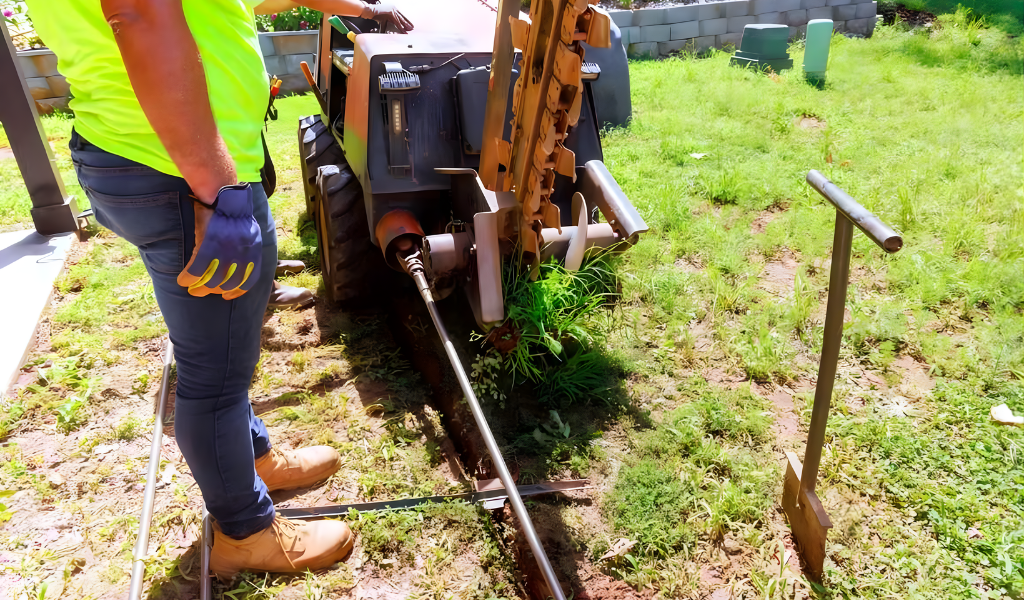
Trenchless technology is one of the most significant advancements in underground construction in the past several decades, and most people have never heard of it. If you have ever had a utility line installed, replaced, or repaired without a single trench appearing in your yard, you have already benefited from it.
In simple terms, trenchless technology refers to a group of methods used to install, repair, or replace underground utilities, water lines, sewer lines, gas lines, electrical conduit, and fiber optic cables, without extensive digging or open trenches. For property owners, contractors, condo associations, and municipalities across Florida, these methods represent a smarter, cleaner, and often more cost-effective alternative to traditional open-cut excavation.
This guide explains exactly what trenchless construction in Ocala, Orlando, and West Palm Beach is, which methods exist, and why it matters for your next underground utility project.
What Is Trenchless Technology?
Trenchless technology, also called no-dig construction, is an umbrella term for a range of underground construction and rehabilitation methods that require little to no surface excavation. Trenchless methods install or repair underground infrastructure from small entry points, avoiding major disruption to roads, driveways, and landscaping.
The core methods that fall under trenchless technology include:
Horizontal Directional Drilling (HDD), also called directional boring
Pipe Bursting
Pipe Lining (CIPP, Cured-In-Place Pipe)
Missile Boring, also called pneumatic boring
Microtunneling
Slip Lining
Auger Boring / Jack and Bore
Each method is suited to a specific set of conditions, pipe diameters, bore lengths, and project types. Understanding which method applies to your situation is the first step toward making the right call on your underground project.
Trenchless Technology Methods Explained
Here are some of the methods explained:
1.) Horizontal Directional Drilling (HDD)
Horizontal directional drilling uses a steerable drill to install underground pipe or conduit along a planned path. After the pilot hole is drilled, the hole is enlarged, and the new pipe is pulled through.
Common uses include electrical conduit, water and sewer lines, gas lines, fiber optic cable, and HDPE pipe installation.
Best for: Long bores, precise routing around obstacles, and working under roads, waterways, and developed areas.
2.) Pipe Bursting
Pipe bursting replaces an old underground pipe by breaking it apart while pulling a new pipe into place behind it.
It only requires small access pits at each end and is often used for sewer, water, and clay pipe replacement.
Best for: Replacing damaged pipes with the same or slightly larger diameter.
3.) Pipe Lining (CIPP)
CIPP lining repairs a damaged pipe from the inside without removing it. A resin-soaked liner is inserted, inflated, and cured to create a new pipe within the old one.
It can seal cracks, roots, joint issues, and minor collapses.
Best for: Repairing sewer, storm, and water pipes when the existing pipe structure is still usable.
4.) Missile Boring
Missile boring uses compressed air to push a boring tool through the ground in a straight line. It is not steerable, so it works best for short, direct crossings.
Best for: Installing conduit under driveways, sidewalks, and small obstacles.
5.) Microtunneling
Microtunneling uses a remotely controlled boring machine to install a large-diameter pipe with high accuracy.
Best for: Municipal sewer, stormwater, and water line projects under roads, railways, and waterways.
Benefits of Trenchless Technology
Whether you are a homeowner replacing a sewer line, a contractor running conduit under a parking lot, or a municipality upgrading aging infrastructure, trenchless drilling in West Palm Beach offers significant advantages over traditional open-cut methods.
1.) Minimal Surface Disruption
The most obvious benefit is what does not happen: no long open trench across your property. Trenchless methods require only small entry and exit pits, leaving driveways, landscaping, pavement, and structures intact. This is especially valuable in Florida, where landscaped yards, paved driveways, and commercial parking areas represent significant investments that would be costly to restore after traditional trenching.
2.) Lower Total Project Cost
While the upfront installation cost of some trenchless methods may be comparable to or slightly higher than open-cut trenching, the total project cost is typically lower. Open-cut trenching requires pavement cutting, excavation, pipe installation, backfilling, compaction, and then full restoration of any concrete, asphalt, or landscaping disturbed. Trenchless eliminates or dramatically reduces that restoration cost.
3.) Faster Completion Time
Trenchless projects are typically completed much faster than open-cut alternatives. A residential HDD job that might take a single day would require several days of trenching, backfill, and restoration work if done the traditional way. Faster completion means less disruption to your daily life or business operations.
4.) Reduced Environmental Impact
Open-cut excavation displaces large volumes of soil, disrupts tree root systems, and can contaminate surrounding areas if underground contaminants are disturbed. Trenchless methods minimize soil displacement, protect existing vegetation, and reduce the overall environmental footprint of the project. For environmentally sensitive areas, including Florida’s wetlands, coastal zones, and protected landscapes, trenchless is often the only viable option.
5.) Less Traffic and Community Disruption
Road crossings and utility work in busy areas using open-cut methods typically require lane closures, traffic rerouting, and extended construction periods that affect businesses, residents, and commuters. Trenchless crossings can often be completed with no lane closures and minimal impact to surrounding traffic flow.
Trenchless Technology vs. Traditional Open-Cut Excavation
| Factor | Trenchless Technology | Traditional Open-Cut |
|---|---|---|
|
Surface disruption |
Minimal |
Extensive |
|
Landscape restoration needed |
Little to no |
Significant |
|
Traffic impact |
Minimal |
Often major |
|
Project timeline |
Faster |
Slower |
|
Total cost (including restoration) |
Often lower |
Often higher |
|
Environmental impact |
Lower |
Higher |
|
Safety Risks |
Lower |
Higher |
|
Best for |
Developed areas, roads, and landscaping |
Open, undeveloped areas |
FAQs
What is trenchless technology in simple terms?
Trenchless technology is a group of underground construction methods that install, repair, or replace pipes and conduits without digging open trenches. Work is done from small access pits at each end of the project area.
Is trenchless technology more expensive than traditional trenching?
The upfront cost is sometimes comparable and sometimes slightly higher, depending on the method and project. However, the total cost, including restoration of pavement, concrete, and landscaping, typically makes trenchless the more economical option in developed areas.
What types of pipes can be installed using trenchless methods?
Trenchless methods can install PVC, HDPE, steel, ductile iron, and copper pipes, as well as electrical conduit and fiber optic cables, depending on the method used.
How long do trenchless pipe repairs last?
CIPP liners and HDPE pipes used in trenchless pipe repairs, installed via HDD or pipe bursting, are engineered for service lives of 50 to 100 years when properly installed. HDPE, in particular, is designed for long-term underground performance with strong resistance to corrosion and chemical degradation.
Conclusion
Trenchless technology has fundamentally changed how underground utilities are installed and rehabilitated. For property owners, contractors, and municipalities across Florida, it offers a better way to get underground utility work done, with less disruption, faster completion, lower total cost, and a significantly smaller footprint on the surface above.
Ready to Get Started With Trenchless Utility Work in Florida?
Trenchless Drilling LLC is a licensed general contractor (CGC1526763), fully insured, and BBB accredited, serving Miami, West Palm Beach, Orlando, Ocala, and the greater Southeast Florida region. With 20+ years of experience and 850+ completed projects, our trenchless boring contractors handle HDD, missile boring, conduit installation, sewer line replacement, pipe fusing, and ground penetrating radar services for residential, commercial, and municipal clients.
Call (305) 600-1734 or request your free estimate today. We offer flat-rate pricing and are available 7 days a week.