
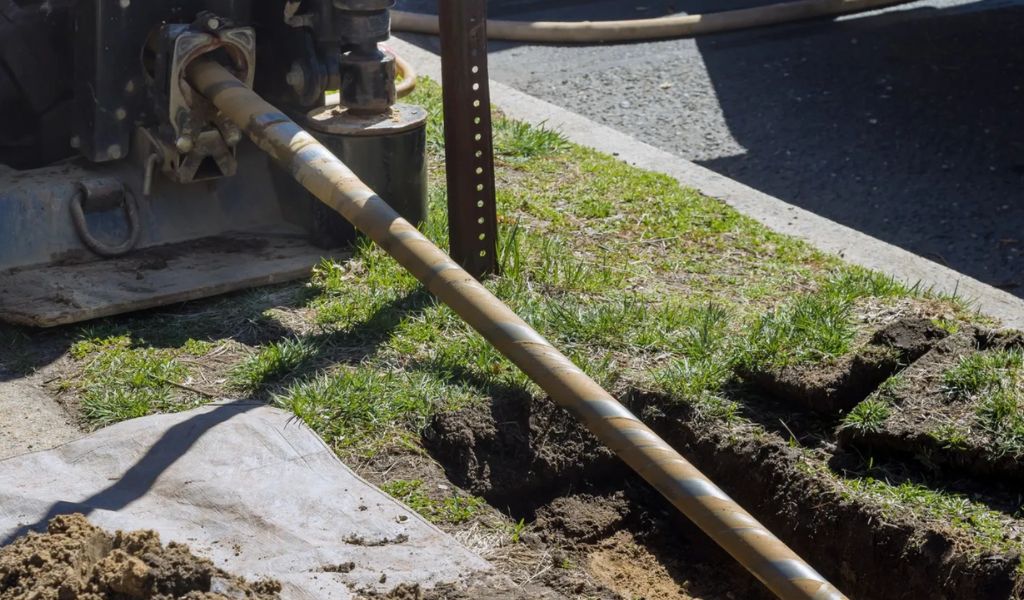
Before breaking ground on any construction or excavation project, knowing what lies beneath the surface is critical. Hidden underground utilities like water lines, gas pipes, electrical cables, fiber optics, and sewer conduits can pose serious safety risks, lead to costly delays, regulatory issues, or even catastrophic damage if struck.
An underground locate service gives builders, contractors, and property owners the confidence to start work safely and efficiently. In this blog, we’ll answer the most common questions about underground locating, explore why it’s essential, and outline methods used in the industry.
1. What Is an Underground Locate Service?
- Gas, water, and sewer lines
- Electrical and telecom cables
- Fiber optic networks
- Irrigation systems
2. Why Is Underground Utility Locating Critical Before Construction?
a. Safety Comes First
b. Avoid Expensive Repairs and Delays
c. Regulatory Compliance
d. Protect Your Team and Community
3. How Do Underground Locate Services Work?
a. Electromagnetic Locating
b. Ground-Penetrating Radar (GPR) Scanning
GPR sends high-frequency radio waves into the soil. When these waves bounce back off subsurface objects, a receiver interprets the reflections. GPR is especially valuable when metallic signals are absent, such as with plastic lines.
This pairs well with services like GPR Scanning West Palm Beach to capture non-metallic utilities that other tools may miss.
c. Combined Techniques
Top underground detection services integrate EM locators, GPR, and GPS mapping to produce comprehensive utility maps that guide excavation crews.
d. Manual Verification
What Are the Common Technologies Used in Underground Locating?
| Technology | Best For |
| Electromagnetic (EM) Locators | Metallic pipes & cables |
| GPR (Ground-Penetrating Radar) | Non-metallic and complex subsurface features |
| Radio Frequency (RF) | Active signal tracing |
| GIS Mapping Tools | Integrating locate results with site plans |
| GPS + Digital Mapping | Precise location records |
Who Should Use Underground Locate Services?
- Homeowners preparing for landscaping or pool installation
- Contractors breaking ground for foundations or utilities
- Municipal infrastructure projects
- Utility and telecom installers
- Contractors planning underground cable installation for power, telecom, or fiber networks
No matter the scale, professional locating services reduce risk and safeguard your project’s success.
6. What Happens If You Don't Locate Utilities First?
- Utility strikes that can injure workers or the public
- Service interruption to homes or businesses
- Costly repair bills and project delays
- Fines for non-compliance with safety regulations
How Accurate Are Professional Underground Locates?
- Correct identification of lines
- Accurate mapping and marking
- Reliable reporting for project documentation
Can You Do Underground Locating Yourself?
DIY tools exist for basic utility detection, but they rarely match the precision and completeness of professional services. Consumer devices may miss non-metallic utilities or provide inaccurate depth readings, leading to mistakes on-site. Hiring experts ensures your location covers all underground risks comprehensively.
How Does a Professional Underground Locate Service Help Your Project?
Full Utility Identification
Professionals identify both public and private utilities, even those not marked by 811 or public records.
Depth and Position Data
Markers and reports show not only where utilities are, but how deep they lie, crucial information for excavation planning.
Digital Mapping
Data can be integrated with site plans or GIS systems for future reference.
Quality Assurance
Certified technicians use calibrated equipment, reducing error.
What Should You Expect When Hiring a Locate Service?
- 1. Pre-Site Assessment – Review project scope and site history
- 2. 811 and Public Utility Notification – Initiate free public utility marking
- 3. Advanced Detection – EM, GPR, and GPS data collection
- 4. Marking Utilities – On-site marking with paint, flags, or pins
- 5. Reporting – Digital deliverables with maps and depth info
- 6. Follow-Up Support – Clarification and additional scans if needed
How to Choose a Reliable Underground Locate Service
- Technology used (GPR, EM, GPS)
- Experience and certifications
- Documentation and mapping quality
- Turnaround time and communication
- Safety and compliance knowledge
Working with a trusted company like Trenchless Drilling ensures you get reliable underground utility locating that integrates with broader services like underground utility installation when your project is ready to proceed.
Frequently Asked Questions
What's the difference between 811 and a professional locate service?
How long does locating take?
Are non-metallic utilities detectable?
Yes, with GPR techniques that visualize subsurface anomalies independent of conductivity.