
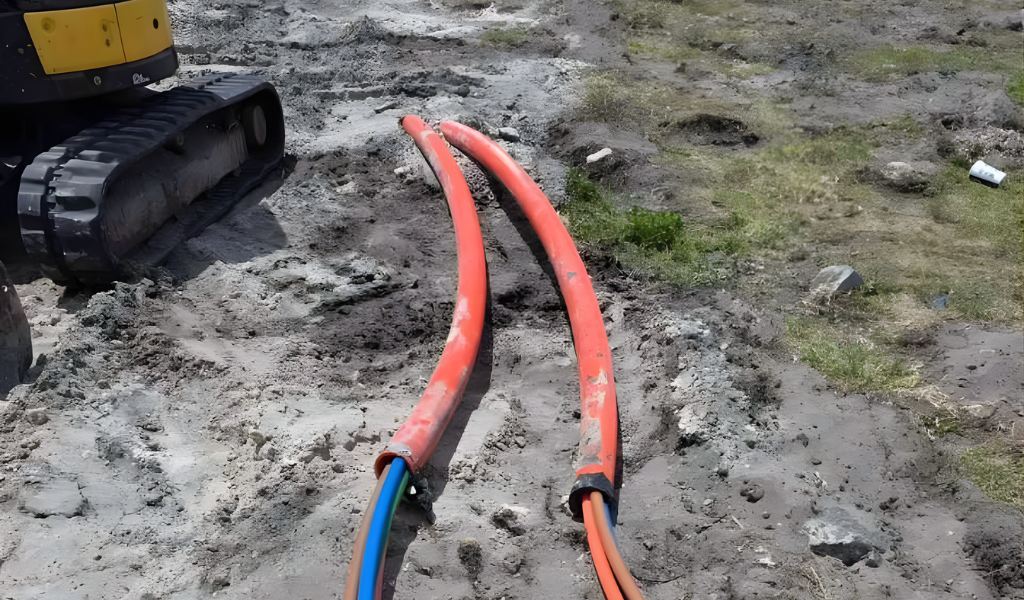
Yes, you can run power lines without tearing up your yard. Underground cable installation, especially using trenchless methods like directional boring, allows cables to be installed cleanly beneath the surface without major excavation. This means your lawn, driveway, and landscaping stay intact while you still get safe, reliable power or fiber-optic connections.
Underground installations are becoming the preferred choice for homeowners and businesses in West Palm Beach because they offer better protection from weather, improved safety, and a much cleaner look. In this blog, we’ll explain how underground cable installation works, why trenchless technology is the best option, and what to expect during the process.
Why Choose Underground Cable Installation?
- Better reliability & resilience: Underground cables are protected from wind, storms, falling trees, and other environmental hazards, resulting in fewer outages.
- Enhanced safety: Burying power lines reduces the risk of accidental contact, electrocution, or damage due to external events, important for both residential and commercial properties.
- Aesthetics & minimal obstruction: Without poles or overhead wires, your yard, driveway, and neighborhood stay visually clean and unencumbered.
- Lower maintenance over time: Because the cables are shielded from weather and physical damage, maintenance and repair frequency tend to be lower than with exposed lines.
- Future-proofing & flexibility: Using conduits for underground cable installation allows future upgrades or additional cables (power, data, fiber) without digging up everything again.
How Underground Cable Installation Works | Key Methods & Process
Open Trenching (Traditional Method)
The most straightforward method. You dig a trench, lay a conduit or direct-burial cable, then backfill and restore the surface.
- Excavation of a trench to a specified depth.
- Bedding material (often sand) is placed at the base to protect the cable from rocks or sharp objects.
- Installation of conduit or cable, then protective layers (sand, protective slabs), followed by backfill and surface restoration.
- Suitable for open yards, undeveloped land, or where surface reinstatement is acceptable.
Pros
- Simple and well-understood.
- Often less expensive upfront than complex methods.
- Requires significant digging, can damage lawn, landscaping, driveways, or other surfaces.
- Restoration can be labor-intensive.
- May disrupt landscaping, garden beds, patios, walkways, etc.
Conduit Installation (Direct-Burial with Protective Ducts)
- Use of PVC, HDPE or other durable plastic conduits to house power or data cables.
- Conduits may be buried directly or installed within a duct bank (a grouped set of conduits) for more complex needs.
- Once the conduit is in place, cables are pulled in, minimizing the risk of damage, moisture ingress, or cable wear.
- Excellent cable protection (moisture, soil movement, rodents, accidental damage).
- Easier to maintain, upgrade or replace cables in future, ideal for long-term infrastructure or multiple utilities (power, fiber, data).
- Works perfectly with underground locate service protocols since conduits can include tracer wires
- Slightly more planning, material cost, and installation coordination than raw direct-burial.
- Requires proper sealing, conduit plugs, tracer wires (if applicable), and clear documentation for future locate efforts.
Trenchless Methods: Boring, Directional Drilling & HDD
- A pilot hole is drilled along a planned underground route, under the driveway, yard, or roadway.
- The pilot hole is then enlarged (reamed) to accommodate conduit or cable.
- A conduit or cable is pulled through, leaving the surface intact above.
- Minimal surface disturbance, perfect for finished lawns, driveways, sidewalks, roads, and landscaping.
- Great for crossing obstacles like roads, driveways, paved areas, or existing landscaping without tearing them up.
- Faster restoration, often just small access pits vs. full trench fill and landscaping repair.
- Requires specialized equipment and skilled contractors.
- Soil conditions, underground obstacles, or existing utilities may impact feasibility.
- More planning is needed (surveying, locating existing utilities, proper conduit selection, and as-built documentation) to avoid future issues.
When Trenchless Makes the Most Sense — Common Use Cases
- You have an existing landscape, lawn, garden, driveway, patio, and sidewalks; you don't want them disrupted.
- You need to cross hard surfaces such as driveways, paved areas, or even roads.
- You expect to run multiple utilities (power, data/fiber, irrigation, future expansions) and want to minimize future digging.
- You want a clean, professional installation that preserves aesthetics and adds long-term value.
- You need minimal downtime: trenchless means faster installation and less disturbance.
Key Considerations & Best Practices Before You Install
Planning & Site Survey
- Conduct a thorough site survey to map existing utilities (water, gas, sewer, telecom) to avoid collisions.
- Design an optimal cable route: shortest yet avoiding obstacles, with proper bend radius for conduits.
- Determine the right burial depth, conduit type (PVC, HDPE, etc.), and cable specifications suitable for your power or data requirements.
Regulatory Compliance & Safety Standards
- Use conduits and cables that comply with local electrical and building codes.
- Ensure proper backfill, sand bedding, protective covers, and warning/marker tape if required.
- Seal conduits properly when not in immediate use (future use or spare ducts) to prevent moisture, debris, or animal ingress.
Use of Tracer Wires & Documentation (For Future Maintenance/Locate Services)
- If installing conduits for later cable pulls or future expansion, include tracer wire during installation.
- Maintain as-built documentation: accurate maps or GPS-based records of conduit/cable layout; this is crucial to avoid accidental damage later.
Choosing the Right Contractor (When You Don't DIY)
- Hire professionals experienced in trenchless methods (directional drilling, boring, HDD), especially for driveway or road crossings.
- Ensure they follow safety standards, use proper equipment, and provide post-installation documentation.
- Ask for transparent planning: route plan, conduit specs, burial depth, future-proofing for additional lines, tracer wires, and clean site restoration.