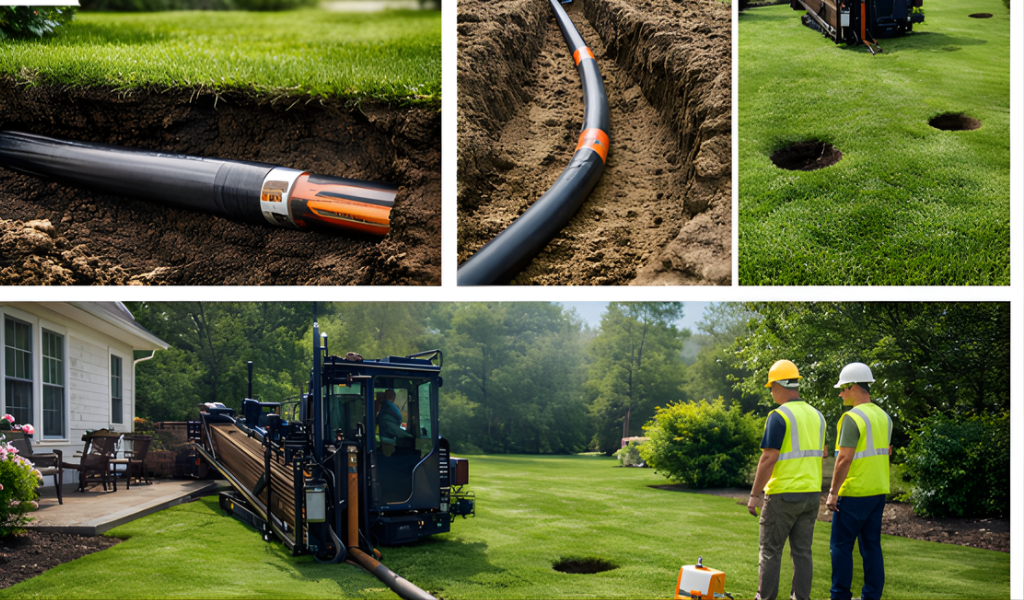
Need to install underground pipes, conduits, or utility lines without tearing up your driveway, lawn, sidewalk, or landscaping? Underground boring is the answer. This trenchless installation method allows contractors to place utilities beneath the surface while keeping your property intact, saving you from costly restoration work and unnecessary disruption.
For homeowners and property owners, underground boring offers a faster, cleaner, and more cost-effective alternative to traditional trenching. Whether you’re installing electrical conduit, water lines, telecom cables, fiber optics, or other underground utilities, trenchless boring in Ocala minimizes surface damage while delivering precise results. That’s why underground boring has become one of the most requested utility installation methods across residential and commercial properties throughout the United States.
What Is Underground Boring?
Many property owners hear the term “underground boring” but aren’t exactly sure what it means. Understanding the process can help you determine whether it’s the right solution for your project.
Underground boring is a trenchless construction method used to install pipes, conduits, and utility lines beneath the ground without digging a continuous trench. Instead of excavating the entire path, contractors create a small entry and exit point and bore underground between them.
Underground Boring in Simple Terms
Think of underground boring as creating a tunnel beneath the surface.
Instead of destroying what’s above ground, the installation happens below it.
Common uses include:
- Electrical conduit installation
- Telecom and fiber optic conduit installation
- Water line installation
- Gas line installation
- Utility service upgrades
- Underground crossings beneath roads
- Bore under driveway projects
- Sidewalk and parking lot crossings
This trenchless approach significantly reduces restoration costs and project timelines.
Why Do Property Owners Choose Underground Boring Instead of Trenching?
Traditional trenching often creates more problems than it solves. Digging across a property can damage expensive landscaping, concrete surfaces, irrigation systems, and access routes.
Underground boring eliminates many of those concerns while providing a cleaner installation process.
Across Florida, including areas where trenchless drilling West Palm Beach projects are common, property owners increasingly choose trenchless methods to avoid the expense and disruption associated with traditional excavation.
Key Benefits of Underground Boring
Property owners often choose trenchless methods because they help preserve valuable surface features.
Benefits include:
- Minimal disruption to your property
- No large trenches across your lawn
- Protection for driveways and sidewalks
- Faster project completion
- Reduced restoration expenses
- Less environmental disturbance
- Improved property appearance during construction
- Safer installation around existing structures
How Does Underground Boring Work?
One of the most common questions property owners ask is how utilities can be installed underground without digging.
While the equipment and techniques vary based on the project, the overall process remains straightforward.
Typical Underground Boring Process
Before any drilling begins, careful planning takes place to ensure safety and accuracy.
The process generally includes:
- Site evaluation and planning
- Utility locating and verification
- Entry and exit point preparation
- Underground bore creation
- Conduit or pipe installation
- System testing and inspection
- Final cleanup
What Types of Underground Boring Are Available?
Not every project requires the same boring method. The best solution depends on distance, soil conditions, utility requirements, and site obstacles.
Understanding the available options helps property owners make informed decisions.
What Is Directional Boring?
Directional boring is one of the most versatile trenchless installation methods available. It allows operators to steer the bore path underground and navigate around obstacles. Directional boring is commonly used for:
- Long utility runs
- Electrical conduit installation
- Telecom and fiber optic projects
- Commercial utility construction
- Municipal infrastructure projects
What Is Horizontal Boring?
Horizontal boring refers to boring operations performed along a horizontal underground path. This approach is ideal when utilities must cross beneath obstacles without disturbing the surface.
Common applications include:
- Road crossings
- Parking lot crossings
- Sidewalk crossings
- Landscape preservation projects
- Utility relocations
What Is Missile Boring?
For shorter distances, missile boring is often the preferred solution. Missile boring in Orlando uses a pneumatic boring tool that creates a narrow underground path quickly and efficiently.
Ideal for:
- Residential utility installations
- Short driveway crossings
- Sidewalk crossings
- Small conduit installations
- Limited-access projects
Can Underground Boring Go Under a Driveway?
Bore Under Driveway Projects
Cutting through a driveway can be expensive and unattractive. Underground boring allows utilities to pass beneath concrete, asphalt, or paver driveways without demolition.
Benefits include:
- No driveway removal
- No concrete replacement
- Faster completion times
- Less disruption to daily activities
- Lower restoration costs
Is Underground Boring Safe Around Existing Utilities?
Safety is one of the biggest concerns for property owners considering underground construction.
Fortunately, modern boring projects rely heavily on planning, utility locating, and experienced operators.
Safety Measures Used During Underground Boring
Professional contractors follow strict procedures before drilling begins.
These steps often include:
- Utility locating
- Site surveys
- Bore path planning
- Equipment calibration
- Ongoing monitoring
When utility locations are accurately identified and proper procedures are followed, underground boring is considered a highly reliable installation method. Experienced operators can achieve impressive precision while minimizing risks to surrounding infrastructure.
When Is Underground Boring the Best Choice?
Not every utility project requires trenchless construction, but many property owners find that it offers significant advantages.
The more valuable the surface area, the more beneficial underground boring becomes.
Underground Boring Is Often Ideal For:
- Homes with established landscaping
- Properties with decorative hardscapes
- Driveway utility crossings
- Commercial properties
- HOA communities
- Parking lot installations
- Utility upgrades
- Fiber optic and telecom projects
If protecting your property’s appearance is a priority, underground boring is often the most practical solution.
Why More Property Owners Are Choosing Trenchless Installation
Property owners increasingly want utility installations completed without the mess and expense of traditional excavation.
Underground boring provides exactly that.
By preserving landscaping, driveways, sidewalks, and other surface improvements, trenchless methods help reduce disruption while delivering efficient underground utility installation.Whether the project requires directional boring, horizontal boring, missile boring, or a simple bore under a driveway crossing, underground boring remains one of the most effective ways to install utilities without destroying your property.