
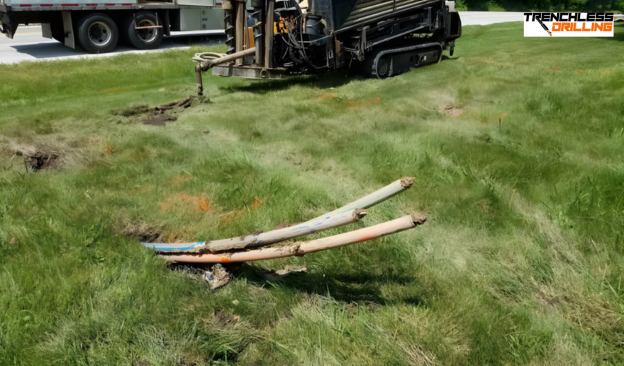
Upgrading underground utility lines, whether gas, water, or fiber, can now be done without tearing up roads, damaging landscapes, or risking existing infrastructure. Using trenchless technologies like directional drilling and precision conduit installation, contractors can install or replace utilities while keeping the surface intact and operations uninterrupted.
If you’re planning to upgrade or expand utility systems, the real question isn’t whether disruption is necessary; it’s which trenchless method is best suited for your project. This guide answers that and walks you through how modern underground utility upgrades actually work in real-world conditions.
What Does It Really Mean To Upgrade Underground Utility Lines Without Disruption?
When most people think of utility upgrades, they imagine trenches, heavy excavation, and weeks of disruption. That used to be true. Today, upgrading underground utility lines is more about precision engineering than excavation.
Instead of digging long trenches, contractors now create controlled underground pathways using horizontal directional drilling (HDD). This allows new pipelines or conduits to be installed beneath roads, buildings, and existing utilities without disturbing them.
In practical terms, this means:
- No road closures in most cases
- No damage to landscaping or structures
- No interference with existing gas, water, or communication lines
This is especially critical in urban environments like Orlando or West Palm Beach, where underground infrastructure is already dense and highly sensitive.
How Do Contractors Avoid Hitting Existing Underground Utility Lines?
This is one of the most important concerns, and where true expertise separates professionals from average contractors.
Avoiding existing underground utility lines starts long before drilling begins. A proper upgrade project involves:
1. Utility Mapping and Subsurface Investigation
- Utility records
- Ground-penetrating radar (if required)
- On-site verification
2. Precision Drill Path Design
- Navigate around existing utilities
- Maintain safe clearance distances
- Account for soil conditions
3. Guided Drilling Technology
Modern HDD systems allow operators to steer the drill head in real time, adjusting depth and direction with high accuracy.
This level of control is what makes trenchless drilling safe for complex environments where multiple underground utility lines already exist.
What Is Trenchless Drilling And Why Is It The Preferred Method?
Trenchless drilling, specifically horizontal directional drilling (HDD), is the backbone of non-disruptive utility upgrades.
Instead of excavating from above, HDD works by drilling a curved underground path between two points. Once the path is created, the new pipe or conduit is pulled through it.
What makes HDD the preferred choice isn’t just convenience; it’s efficiency and risk reduction.
Compared to traditional excavation, HDD:
- Reduces surface damage almost entirely
- Shortens project timelines significantly
- Minimizes restoration costs
- Allows work under roads, waterways, and structures
How Are Fiber Or Communication Lines Installed Underground Today?
With the rapid expansion of high-speed internet infrastructure, installing fiber or communication lines underground has become one of the most common trenchless applications.
The process typically involves two critical components:
Directional Boring for Path Creation
A bore path is drilled underground to connect two access points; this could be across streets, neighborhoods, or commercial zones.
Conduit Installation for Protection
Once the bore is complete, a conduit is installed to house the fiber cables. This protects the lines from environmental damage and allows for future upgrades without additional drilling.
This is where services like conduit installation Orlando become essential, especially in growing urban areas where infrastructure needs to scale quickly without disruption.
How Are Gas And Water Lines Upgraded Safely Without Excavation?
Upgrading gas and water systems requires a higher level of caution due to safety risks and regulatory requirements.
For these utilities, trenchless methods focus on controlled installation and leak-proof connections
Gas Line Upgrades
- Zero interference with existing lines
- Maximum structural integrity
- Long-term reliability
Water Line Replacement
Why Is HDPE Fusion Welding Critical In Underground Utility Upgrades?
One of the most overlooked, but essential components of trenchless projects is HDPE fusion welding.
Unlike traditional pipe connections, HDPE fusion welding creates a continuous, seamless pipeline. This eliminates weak points where leaks typically occur.
In real-world applications:
- Pipes are fused into a single continuous system before installation
- The fused pipeline is then pulled through the drilled path
- The result is a highly durable, leak-resistant utility line
This is why services like trenching and excavation company Ocala are not just an add-on; they are fundamental to long-term system performance.
What Should You Expect During A Trenchless Utility Upgrade Project?
Initial Planning
Design and Permitting
Execution
Testing and Completion
Why Are Trenchless Methods Becoming The Standard Across The USA?
Across the United States, infrastructure demands are increasing, but so are restrictions on disruption, environmental impact, and cost.
Trenchless technology aligns perfectly with these requirements because it:
- Preserves existing infrastructure
- Reduces environmental damage
- Meets modern safety and compliance standards
- Supports rapid urban and suburban expansion
Frequently Asked Questions
Can underground utility lines really be upgraded without digging?
Is trenchless drilling safe around existing utilities?
When performed by experienced contractors, it is one of the safest methods available due to guided drilling and precise planning.
How long does a trenchless upgrade take?
Most projects are completed faster than traditional excavation because there is minimal surface disruption and no restoration delays.
Is this method suitable for residential areas?
Absolutely. It is especially effective in residential and urban environments where disruption must be minimized.
Final Thoughts
Upgrading underground utility lines no longer requires disruption, damage, or delays. With the right combination of trenchless drilling, conduit installation, and HDPE fusion welding, it’s possible to modernize infrastructure while preserving everything above ground.
The key is working with experienced professionals who understand how to navigate complex underground environments safely and efficiently. When done correctly, trenchless upgrades don’t just solve today’s problems, they future-proof your entire utility system.
Ready to Upgrade Your Underground Utility Lines Without Disruption?
If you’re planning a project involving gas, water, or fiber lines, choosing the right trenchless approach can save time, reduce costs, and eliminate surface damage. Work with experienced professionals who specialize in precision drilling, conduit installation, and HDPE fusion welding to ensure your project is completed safely and efficiently.
Visit Trenchless Drilling, LLC to explore your options and get expert guidance tailored to your project.