
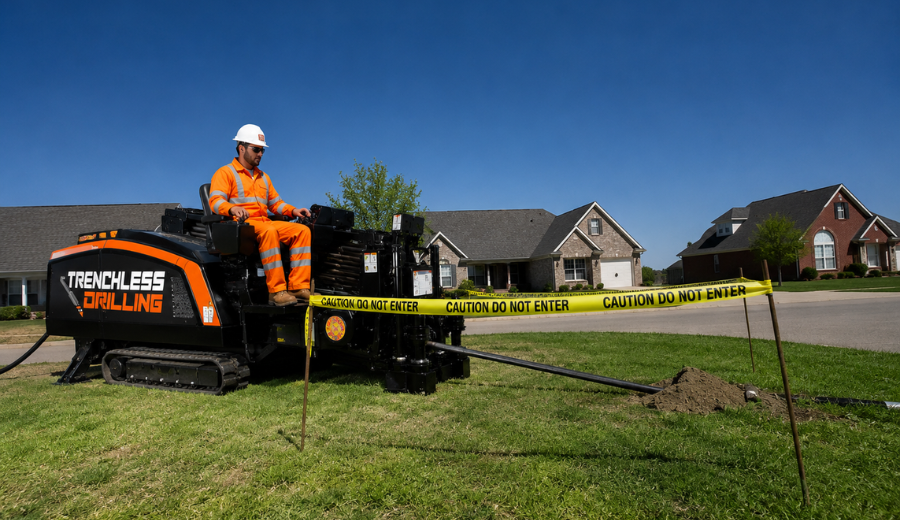
You can run a water line under a driveway without digging it up by using trenchless boring methods like pneumatic missile boring or horizontal directional drilling (HDD), both of which create an underground path through small access pits instead of an open trench. The driveway surface stays completely intact from start to finish.
If you’re planning a new water line, need to install a water line underground, replace an aging pipe, or fix a leak beneath concrete, tearing out the driveway probably feels like the only option. It isn’t. This guide walks through exactly how trenchless water line installation works, which method fits your project, and what to expect before, during, and after the work is done.
Can You Really Run a Water Line Under a Driveway Without Excavating It?
Yes, and it’s one of the most common reasons property owners call a trenchless contractor in the first place. Instead of cutting through concrete or asphalt, the entire installation happens below the surface.
Here’s what makes it possible:
- Two small access pits are dug at either end of the driveway, not a trench along its length.
- A guided boring tool creates a straight underground tunnel between the two points.
- The new water line is pulled through the finished tunnel once boring is complete.
- The pits are backfilled, and the driveway surface is left undisturbed.
What Trenchless Methods Are Used to Install a Water Line Under a Driveway?
Two trenchless techniques handle the vast majority of driveway water line projects, and the right one depends mostly on distance and site conditions. Both avoid cutting the surface, but they work differently underground.
- Missile boring (pneumatic boring): A compressed-air tool drives a straight tunnel through the soil, ideal for shorter runs, generally under 100 feet, with simple straight-line paths.
- Horizontal directional drilling (HDD): A steerable drill head bores a pilot path that can be guided around obstacles, better suited for longer runs or more complex site layouts.
- Access pit boring: Used alongside either method, small entry and exit pits are the only ground disturbances required.
- Utility locating first: Before any tool enters the ground, existing lines are marked so the new water line's path avoids conflicts.
How Does the Process Work Step-by-Step?
Every trenchless water line installation follows the same basic sequence, whether you need to install pipe under a driveway for a residential property or complete a longer commercial run. Understanding each step of trenchless drilling in West Palm Beach helps set realistic expectations for timing and disruption.
- Utility locating and planning. Existing utilities are identified through 811 and on-site equipment, and the bore path is planned around them.
- Access pit setup. Two small pits are dug, one on each side of the driveway, marking the entry and exit points for the bore.
- Boring the tunnel. A pneumatic missile or HDD rig creates a straight or guided path underground, depending on the method used.
- Pulling the new water line. The pipe is attached and pulled back through the finished tunnel in a single pass.
- Testing and restoration. Connections are pressure-tested, the pits are backfilled, and the site is cleaned up, often the same day.
Why Choose Trenchless Installation Instead of Digging Up the Driveway?
Traditional trenching means cutting the entire driveway open along the water line’s path, which comes with real costs beyond the labor itself. Trenchless methods were developed specifically to avoid that trade-off.
- Preserves the concrete or asphalt surface completely, with no cutting or patching
- Avoids weeks of restoration time for concrete curing or asphalt repair
- Reduces total project cost by eliminating demolition and resurfacing
- Keeps landscaping, irrigation, and hardscape features around the driveway untouched
- Minimizes downtime for driveways that provide the only access to a garage or parking area
Is It Safe to Install a Water Line Underground Near a Driveway?
Safety depends entirely on knowing what’s already buried before boring starts, which is why utility locating is never skipped on a properly run project. This applies whether the new line is running parallel to a driveway or crossing beneath it.
- Public utilities are located through Sunshine 811 before any bore begins.
- On-site locating equipment confirms depths and catches private lines that 811 doesn't track.
- Bore paths are planned to maintain safe clearance from existing electrical, gas, and communication lines.
- Pressure testing after installation confirms the new water line is properly connected and leak-free before the pits are closed.
How Long Does It Take to Run a Water Line Under a Driveway?
Timing depends on the length of the run, soil conditions, and which trenchless method is used, but most residential jobs move quickly compared to open trenching. This is often the deciding factor for property owners choosing between methods.
- Short residential runs, typically completed within a few hours using missile boring in Orlando
- Longer or more complex paths using HDD, often finished within a single day
- Site restoration and testing included in that same visit, with no separate return trip
- Minimal disruption to driveway access throughout the project
Where We Provide Water Line Installation Services
Trenchless Drilling, LLC, installs and replaces water lines beneath driveways, sidewalks, and yards across Florida, always starting with proper utility locating before any boring begins. Our crews are equipped to handle both short pneumatic bores and longer directional drilling runs, depending on what a project calls for.
We provide trenchless drilling, missile boring, and HDD services in Ocala, along with the same trenchless water line installation across Tampa, Jacksonville, and Gainesville. Whether you need to install pipe under a driveway for a brand-new water line or replace a failing one, our team handles the locating, boring, and restoration in one coordinated visit.
Frequently Asked Questions
Can you install a water line under a driveway without breaking the concrete?
Yes. Trenchless methods like missile boring and HDD create an underground tunnel through small access pits, leaving the concrete fully intact.
What's the difference between missile boring and HDD for a water line?
Missile boring works best for shorter, straight runs, while HDD is better suited for longer distances or paths that need to be steered around obstacles.
How long does it take to run a water line under a driveway?
Most residential projects are completed within a few hours to a single day, depending on the length of the run and the method used.
Is trenchless water line installation safe near other utilities?
Yes, as long as utility locating through 811 and on-site equipment is completed before boring begins.
Do I need to remove landscaping to install a water line underground?
No. Trenchless boring only requires two small access pits, so landscaping around the driveway stays undisturbed.
Can a missile boring go under a driveway without cutting it?
Yes. The same boring methods used to install pipe under a driveway can also be used to replace or bypass a failing water line.
Final Thoughts
Running a water line under a driveway no longer means sacrificing the surface above it. With missile boring and HDD, property owners get a properly installed, pressure-tested line while the driveway stays exactly as it was.
If you have a water line project in West Palm Beach, Orlando, Ocala, or anywhere else in Florida, Trenchless Drilling can locate, bore, and install your new line in a single visit.
Need to Run a Water Line Under Your Driveway Without Excavation?
Avoid the cost, mess, and downtime of cutting through concrete or asphalt. Trenchless Drilling, LLC, provides expert trenchless water line installation using missile boring and HDD across Florida. From utility locating to final testing, our team handles the entire process with minimal disruption. Contact us today to schedule your project and get a free estimate.