
Trenchless Drilling

How to Bore Pipe Under Driveway Without Digging Up Concrete

How to Bore Pipe Under Driveway Without Digging Up Concrete
If you need to bore a pipe under a driveway, the best approach is to create an underground tunnel rather than cut the concrete slab open. Boring keeps the driveway intact, avoids costly demolition, and leaves your home accessible throughout the project. Today’s trenchless and underground boring methods make it possible to run water lines, electrical conduit, irrigation pipes, and even sewer repairs under a driveway without ever disturbing the surface. For property owners across the USA, and especially in places like West Palm Beach, where concrete driveways are common, boring is cleaner, faster, and far less disruptive than digging.

Why Homeowners Want a No-Dig Solution

Breaking apart a driveway can turn into a chain reaction of headaches. The demolition creates noise, dust, debris, and a big repair bill. Then comes the cost of re-pouring concrete, re-leveling the area, and waiting days for everything to cure. If you rely on your driveway daily, that downtime becomes a major inconvenience.

A trenchless bore avoids all of that. You get the utility line you need without tearing up your property, sacrificing curb appeal, or losing access to your garage. This is also one of the best ways to bore under a sidewalk or any paved surface without disruption.

What It Means to "Bore Pipe Under Driveway”

Boring a pipe under a driveway is a trenchless installation method that creates a tunnel beneath the concrete. Instead of cutting through the driveway, a contractor digs two small access pits, one on each side. A guided tool or drill punches through the soil, creating a clean path for the pipe. Once the pipe is installed, the pits are backfilled, and the driveway remains untouched.

This method works for:

The goal is simple: install or replace underground utilities without damaging the surface above.

The Most Effective Methods to Bore Under a Driveway

Different trenchless tools achieve the same outcome, but the method depends on soil conditions, distance, and pipe type. Here are the most common techniques used in residential projects.

1. Horizontal Directional Drilling (HDD)

HDD uses a steerable drill that creates a pilot hole and then enlarges it before pulling the pipe through. It’s extremely accurate and ideal for longer or deeper bores.

Best for:

2. Pneumatic Boring Missile (Impact Mole)

One of the most popular options, especially in West Palm Beach, is the pneumatic boring missile that West Palm Beach contractors use for quick, clean installations. This missile-shaped tool creates a tunnel by tapping its way through the soil, and your pipe is then fed into the bore.

Best for:

3. Horizontal Auger Boring

An auger rotates through the soil, removing material as it advances. It’s strong, reliable, and more precise than DIY water jetting.

Best for:

4. Water Jet or DIY Boring (Limited Use)

Homeowners sometimes use a water jet to push a PVC pipe under small sidewalks. While it may work for sidewalks, it’s not recommended for driveways due to soil instability and risk of misalignment.

Best for:

Is Your Property a Good Fit for Trenchless Driveway Boring?

Most homes qualify, but a few factors determine the ideal method.

1. Soil Type

Sandy soils (common in Florida) are easy to bore. Clay and rocky soils may require HDD or auger methods.

2. Driveway Width & Access

A typical driveway crossing is anywhere from 8 to 20 feet. Contractors need space for equipment and safe approach angles.

3. Utility Location

Contractors will mark all underground utilities before boring. This prevents accidental strikes and helps the operator choose the right path.

4. Permits & Local Codes (USA)

Most residential projects require simple utility location checks. Public right-of-way bores may require city permits.

What the Process Looks Like When You Hire a Professional
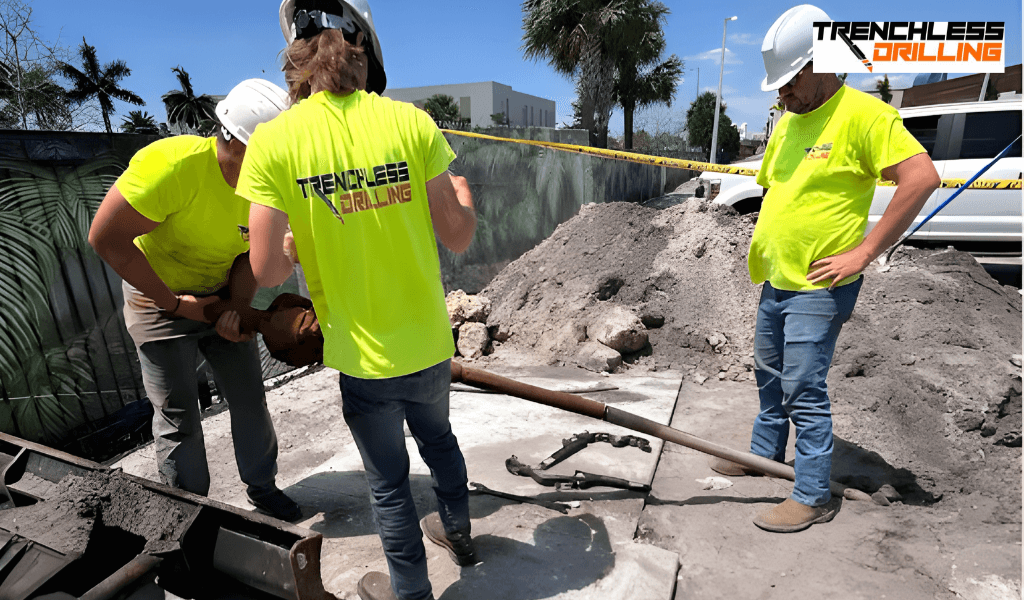
What the Process Looks Like When You Hire a Professional

When you bring in a trenchless specialist, you should know exactly what to expect.

1. Site Assessment

Your contractor inspects the driveway, measures the crossing, checks utilities, and reviews soil conditions.

2. Entry and Exit Pit Setup

Two compact pits are dug, usually only a few feet across, to allow the boring tool to enter and exit the soil.

3. The Bore

Whether using HDD, auger boring, or a pneumatic missile, the tool is launched and guided beneath the driveway until it reaches the other side.

4. Pipe Installation

The pipe or conduit is fed through the bore path. The installation is smooth and stays below the slab level.

5. Backfilling and Cleanup

The pits are filled, compacted, and cleaned up. The driveway remains untouched.

6. System Testing
Water, sewer, electrical, or irrigation lines are tested and ready to use right away.

If you choose a local expert, such as a contractor experienced in trenchless drilling in West Palm Beach, the entire process is fast, efficient, and minimally disruptive.

Cost: Is Boring Cheaper Than Digging?

Boring can appear more expensive at first glance, but digging through concrete brings hidden costs:
Once you add up these expenses, trenchless boring often comes out equal to, or even more affordable than, open cutting. The value really shows in preserved property, time saved, and long-term durability.

How to Choose the Right Contractor

Not all contractors have the same skill level or equipment. Here’s what to look for:
A knowledgeable trenchless professional will explain each method, verify the best approach for your property, and answer questions clearly.

Frequently Asked Questions

Can I fix a sewer line without digging under my driveway?
Yes. Modern trenchless methods, such as sewer pipe lining or pipe bursting, can repair or replace sewer lines without cutting your driveway or yard.
Sidewalk crossings are much simpler than driveways. A small pneumatic mole or even a water-jet method can work for light irrigation lines. For driveways, stronger trenchless methods are recommended.
Short residential bores typically range from a few hundred to a few thousand dollars, depending on distance, soil, and pipe size. Complex or long crossings may cost more. The big savings come from avoiding driveway demolition and reconstruction.

Conclusion

Boring a pipe under your driveway is one of the smartest ways to install or repair utilities without damaging your property. Whether you’re running a new water line, fixing a sewer issue, or installing electrical or irrigation conduit, trenchless methods keep your driveway intact, save you time, and avoid the heavy cost of concrete demolition. With the right tools and a trained professional, the entire process becomes fast, clean, and stress-free. If you want the safest, most practical option, trenchless boring is almost always the better choice.

Ready to Bore a Pipe Under Your Driveway?

If you want a clean, no-dig installation, our team can help you choose the right trenchless method and complete the job safely, without disturbing your concrete. Contact us today for expert boring services, fast scheduling, and reliable trenchless drilling in West Palm Beach.
Scroll to Top