
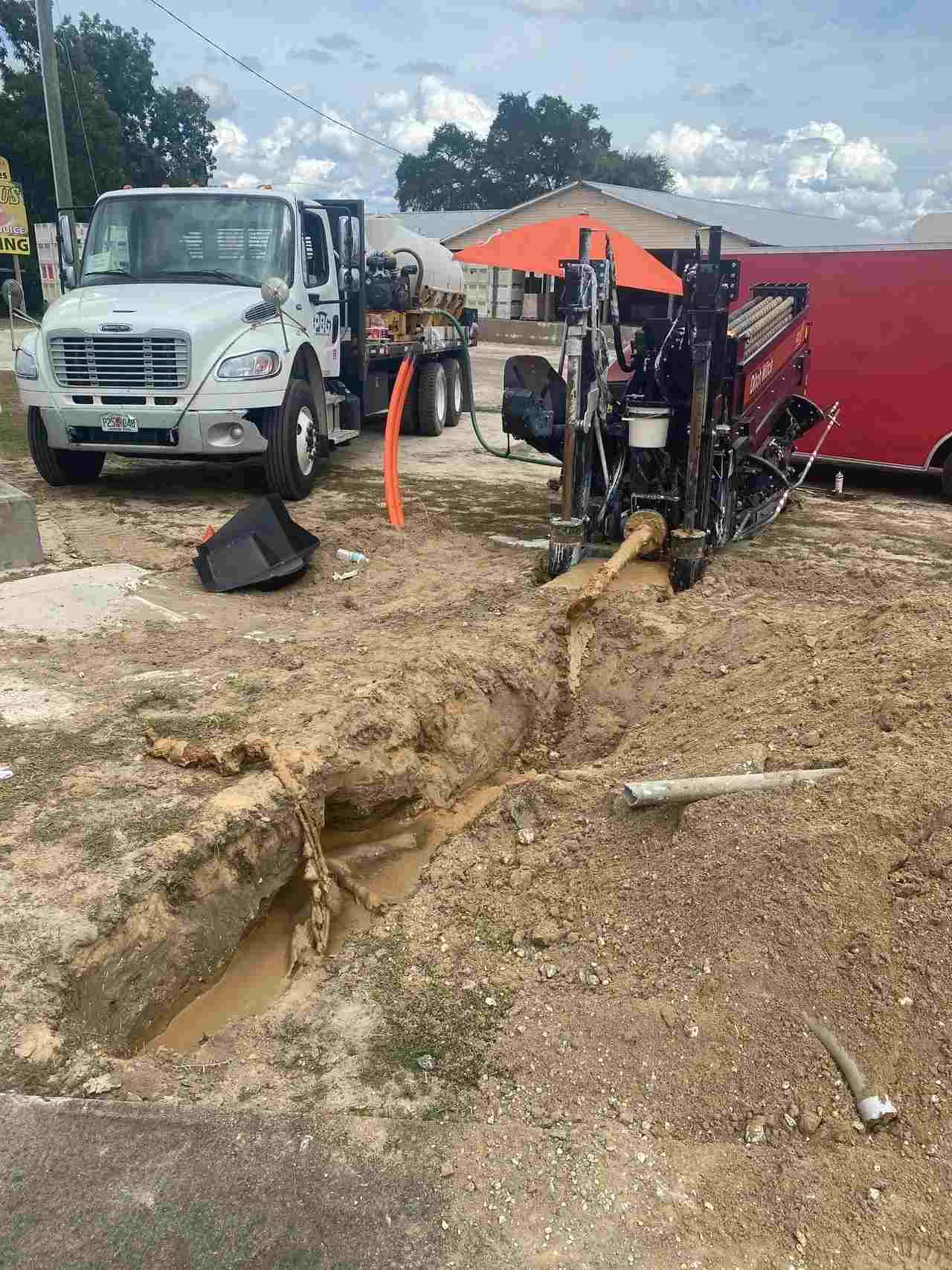
Horizontal Directional Drilling (HDD) is a highly efficient method for laying utilities in large developments. Here’s a guide on how to utilize HDD effectively:
1. Site Assessment and Planning:
- Conduct a thorough site survey to assess the terrain, soil conditions, existing utilities, and any potential obstacles.
- Identify the locations for utility entry and exit points, considering factors such as property boundaries, easements, and regulatory requirements.
- Develop a detailed HDD plan, including the drill path, depth, and alignment to minimize environmental impact and avoid conflicts with existing infrastructure.
2. Permitting and Regulatory Compliance:
- Obtain all necessary permits and approvals from regulatory authorities, including local municipalities, environmental agencies, and utility providers.
- Ensure compliance with regulations governing HDD operations, environmental protection, and safety standards.
3. Equipment Selection and Mobilization:
- Select the appropriate HDD rig and supporting equipment based on the project's scale, soil conditions, and drill length.
- Mobilize equipment to the site and set up staging areas for HDD operations, including storage of drilling fluid, pipes, and other materials.
4. Drilling Operations:
- Conduct pilot hole drilling using a guided drilling system to accurately navigate the desired path while avoiding underground obstacles.
- Monitor drilling parameters such as borehole trajectory, drilling fluid pressure, and torque to ensure precise control and minimize risks.
- Install temporary casing or reaming tools as needed to enlarge the borehole to the required diameter for utility installation.
5. Utility Installation:
- Pull utility conduits or pipes through the drilled borehole using a pulling rig or HDD machine equipped with pulling capabilities.
- Ensure proper alignment and depth of the installed utilities to meet design specifications and regulatory requirements.
- Use specialized equipment such as pipe rollers or lubrication systems to facilitate smooth installation and minimize friction.
6. Backfilling and Site Restoration:
- Backfill the drilled borehole with suitable materials, such as native soil or engineered backfill, to provide support and stability to the installed utilities.
- Compact backfilled areas to achieve proper compaction and prevent settlement or subsidence.
- Restore the site to its pre-construction condition, including reseeding grass, repairing pavement, and restoring landscaping features as necessary.
7. Quality Assurance and Documentation:
- Conduct post-installation inspections to verify the integrity and functionality of the installed utilities.
- Document the HDD process, including bore profiles, as-built drawings, and installation records, for future reference and maintenance purpose
8 Safety and Environmental Considerations:
- Implement safety protocols and best practices to ensure the protection of workers, the public, and the environment throughout the HDD operation.
- Properly manage drilling fluids, spoils, and other waste materials to prevent contamination of soil and water resources.
By following these steps and leveraging the capabilities of HDD technology, developers can efficiently and effectively lay utilities in large developments while minimizing disruption and environmental impact.