
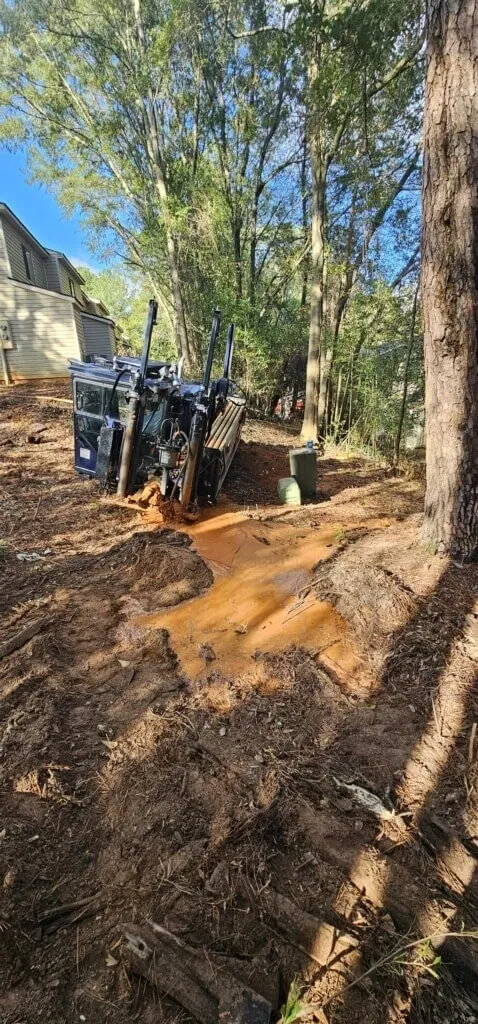
The Evolution of Directional Drilling:
Benefits in Agriculture:
In the realm of agriculture, directional drilling offers a plethora of advantages over traditional trenching methods. Firstly, it minimizes surface disruption, preserving the integrity of the soil structure and minimizing soil compaction, which is crucial for optimal crop growth. Unlike trenching, which requires extensive excavation and land disturbance, directional drilling creates minimal surface disturbance, making it ideal for sensitive environments and established crop fields.
Furthermore, directional drilling enables precise placement of irrigation lines, allowing farmers to customize the layout according to topographical features and crop requirements. This flexibility ensures efficient water distribution, minimizing wastage and maximizing crop yield. Additionally, by avoiding surface obstacles such as roads, buildings, and existing infrastructure, directional drilling reduces the risk of damage and costly repairs, enhancing operational efficiency and cost-effectiveness.
Enhanced Environmental Sustainability:
In an era marked by heightened environmental awareness, sustainable agricultural practices are imperative. Directional drilling aligns with this ethos by reducing environmental impact and promoting resource conservation. By minimizing soil disturbance and preserving natural habitats, this method helps mitigate erosion, soil degradation, and habitat fragmentation. Moreover, by optimizing water usage through precise irrigation line placement, directional drilling contributes to water conservation efforts, mitigating the strain on finite water resources.
Challenges and Considerations:
While directional drilling offers compelling benefits, its implementation in agriculture is not without challenges. Adequate training and expertise are essential to navigate complex underground conditions and avoid potential hazards such as utility conflicts and groundwater contamination. Moreover, the initial investment in specialized drilling equipment and technology may deter some farmers, necessitating careful cost-benefit analysis.
In conclusion, directional drilling represents a paradigm shift in the installation of irrigation lines, offering unparalleled precision, efficiency, and environmental sustainability. By minimizing surface disruption, optimizing water distribution, and enhancing resource conservation, this innovative technique empowers farmers to cultivate crops more effectively while minimizing their environmental footprint. As agriculture continues to evolve in the face of mounting challenges, directional drilling stands as a beacon of innovation, revolutionizing the way we approach water management in farming practices.