
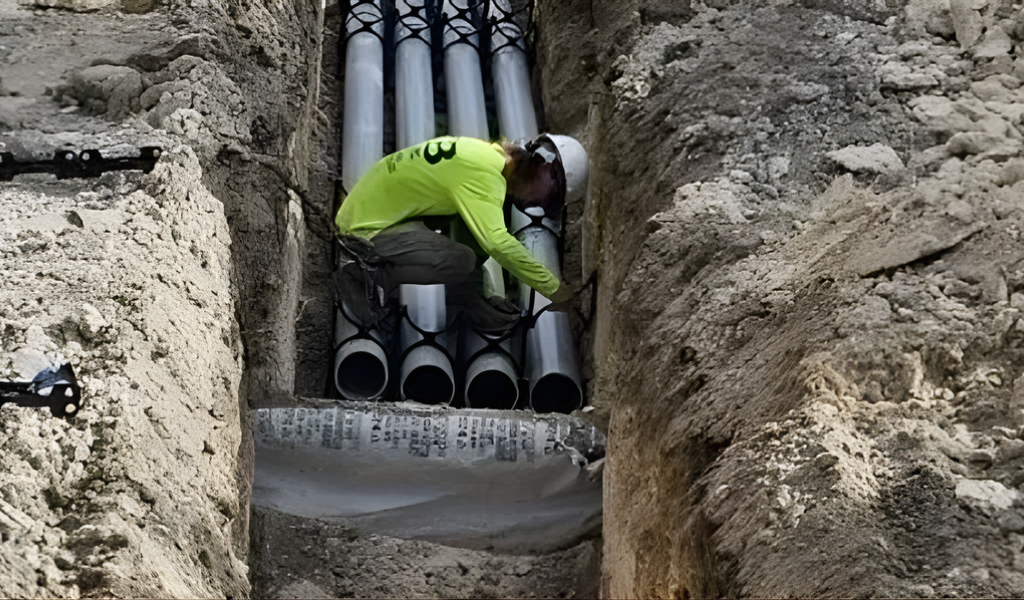
Running fiber optic cable underground is the process of installing high-speed communication lines beneath the surface using engineered pathways like conduits and directional drilling to ensure safe, scalable, and long-term connectivity for commercial properties. For property managers and developers, understanding how this installation works is critical because modern businesses depend heavily on uninterrupted, high-speed data infrastructure. Any mistake during installation can lead to costly underground utility damage, delays, and system failures.
In most commercial environments, underground fiber installation is planned alongside other infrastructure systems such as water lines, drainage networks, and sewer systems to ensure coordinated development and minimal disruption.
What Does Underground Fiber Optic Installation Mean in Commercial Projects?
Underground fiber optic installation refers to placing communication cables beneath the ground inside protective conduits rather than running them overhead. This method is widely used in commercial properties because it offers better protection, cleaner installation, and long-term durability.
Unlike traditional wiring methods, fiber optic systems require precision planning, as even minor bending or damage can affect performance. Fiber optic cables have a minimum bend radius — typically 10–20 times the cable diameter — and any violation of that radius during installation can permanently degrade signal quality without any visible external damage.
Key objectives of underground installation include:
- Protecting cables from weather and physical damage
- Ensuring high-speed, uninterrupted data transmission
- Reducing long-term maintenance costs
- Supporting scalable commercial connectivity
Why Do Commercial Properties Prefer Underground Fiber Installation?
Major advantages include:
- No exposure to storms, wind, or environmental damage
- Reduced risk of accidental cuts or vandalism
- Cleaner infrastructure layout in commercial zones
- Better long-term performance stability
- Easier integration with other underground utilities
In large commercial developments, underground systems are also easier to expand without disrupting daily operations.
How Is Running Fiber Optic Cable Underground Actually Done?
The process is highly engineered and usually involves multiple stages:
1. Site Survey and Utility Mapping
Before any digging or drilling, contractors identify existing underground utilities to prevent interference or damage.
This step is critical to avoid:
- Water line disruption
- Electrical cable damage
- Sewer system interference
2. Conduit Installation (Protected Pathway Creation)
A protective conduit is installed underground to house the fiber optic cables safely.
In many commercial projects, professionals use:
- Conduit installation Tampa methods for structured underground routing
- PVC or HDPE conduits for long-term durability
3. Horizontal Directional Drilling (HDD Method)
One of the most efficient methods for underground fiber installation is trenchless drilling.
This process is commonly part of:
Instead of digging long trenches, HDD creates a controlled underground path where conduits are pulled through with minimal surface disruption.
Benefits of HDD include:
- No major excavation required
- Minimal disruption to roads or parking lots
- High-precision underground routing
- Faster project completion times
4. Cable Pulling and Installation
Once conduits are placed, fiber optic cables are carefully pulled through using specialized equipment to avoid tension damage.
Technicians ensure:
- No excessive bending
- Proper alignment
- Signal integrity preservation
5. Testing and Activation
- Signal strength
- Data transmission quality
- Connection stability
Only after successful testing is the system activated for commercial use.
What Challenges Occur During Underground Fiber Installation?
- Unexpected underground utility interference
- Hard soil or rocky terrain
- Risk of underground utility damage
- Incorrect mapping of existing infrastructure
- Coordination issues in busy commercial zones
This is why experienced contractors are essential for safe installation.
How Is Underground Fiber Installation Connected to Other Utility Systems?
In commercial environments, fiber optic installation is rarely a standalone project. It often overlaps with broader underground infrastructure work.
For example:
- Sewer system mapping must be completed before drilling
- Drainage pathways must be avoided
- Electrical conduits must be clearly identified
- commercial sewer line repair
- underground utility damage assessment
Why Horizontal Directional Drilling Is Preferred for Fiber Installation
Key advantages:
- Ideal for commercial roads and parking lots
- Reduces restoration costs
- Minimizes disruption to businesses
- Enables long-distance underground routing
What Role Do Property Managers Play in Fiber Installation Projects?
- Proper scheduling of installation work
- Coordination with utility contractors
- Minimizing disruption to tenants and operations
- Ensuring compliance with infrastructure planning
Common Mistakes to Avoid in Underground Fiber Projects
Many installation issues occur due to poor planning or rushed execution.
Avoid:
- Skipping utility mapping before drilling
- Ignoring existing underground infrastructure
- Using improper conduit materials
- Failing to test systems after installation
- Hiring non-specialized contractors
How Does Underground Fiber Installation Impact Long-Term Infrastructure?
Properly installed fiber systems improve:
- Commercial connectivity speed
- Property value
- Tenant satisfaction
- Scalability for future expansion
Connection Between Fiber Installation and Other Underground Systems
Underground fiber projects often run parallel with other infrastructure systems. In large developments, coordination with sewer, water, and drainage systems is essential.
In fact, improper planning can sometimes lead to issues that require services like:
- commercial sewer line repair
- underground utility damage mitigation
When Should You Upgrade to Underground Fiber Systems?
- Your property requires high-speed connectivity upgrades
- Existing overhead cables are outdated or unreliable
- You are developing a new commercial site
- You want long-term infrastructure stability
Frequently Asked Questions
What is running fiber optic cable underground?
Why is HDD commonly used for underground fiber installation?
How is underground fiber installation related to other utilities?
Conclusion
Underground fiber optic installation is a highly technical process that requires precision, planning, and the right engineering approach. From conduit installation to trenchless drilling, every step plays a critical role in ensuring safe and efficient connectivity for commercial properties.
Trenchless Drilling, LLC brings 20+ years of underground utility experience, 850+ completed commercial projects, and over one million linear feet of installed conduit to every fiber installation project. Our teams serve Tampa, Orlando, West Palm Beach, and Ocala — delivering trenchless fiber conduit solutions built to last.
For property managers and developers looking for reliable underground infrastructure solutions, working with experienced contractors ensures minimal disruption and long-term performance.
Need Safe & Reliable Underground Fiber Installation for Your Commercial Property?
Running fiber optic cable underground requires precise planning, advanced drilling methods, and careful coordination with existing utilities to avoid costly delays or damage.
For professional underground fiber installation, conduit planning, and trenchless HDD solutions, connect with Trenchless Drilling, LLC today and get expert support for your project from planning to execution.