
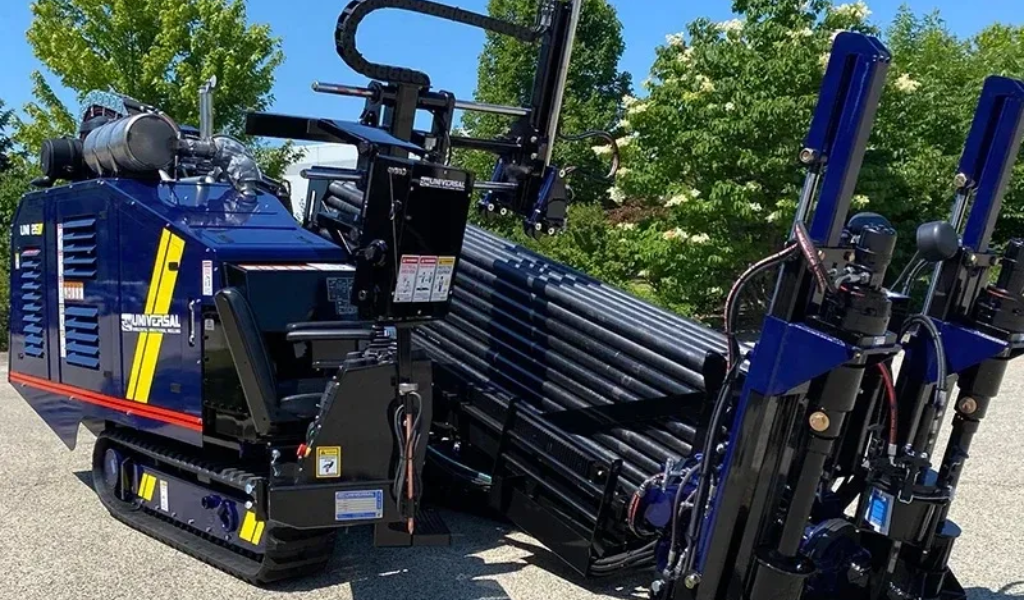
Horizontal directional drilling (HDD) is one of the most efficient methods available for installing underground utilities without tearing up your property. Whether you are a homeowner who needs a new water or electrical line, a contractor managing a commercial build, or a property manager overseeing a large infrastructure upgrade, HDD offers a cleaner, faster, and less disruptive alternative to traditional open-cut trenching.
In simple terms, HDD allows a drill to travel underground along a precise, controlled path, beneath roads, driveways, landscaping, and existing utility lines, without breaking the surface above. No trenches. No restoration bills. No weeks of torn-up yard or blocked driveways. This guide covers everything you need to know about how HDD works, what it costs, when it makes sense, and how to choose the right contractor for your project in Florida.
What Is Horizontal Directional Drilling (HDD)?
Horizontal directional drilling in West Palm Beach, also known as directional boring, is a trenchless method used to install underground pipes, conduits, and cables along a precise, pre-planned path beneath the surface. Unlike traditional trenching, which requires digging a long open trench from Point A to Point B, HDD uses a steerable drill rig to create a controlled underground bore hole without disturbing the surface above.
The pipe, conduit, or cable is then pulled through that bore hole once the path is complete. The result is a fully installed underground utility with minimal surface impact, no landscape damage, and no concrete or asphalt to repair afterward.
HDD is used across a wide range of applications, including:
- Electrical conduit installation
- Gas line installation and replacement
- Water line installation and replacement
- Sewer line replacement
- Fiber optic and telecom cable installation
- HDPE pipe installation for irrigation and stormwater
How Does Horizontal Directional Drilling Work? (Step-by-Step)
Understanding the HDD process helps property owners and contractors set realistic expectations for timelines, access requirements, and site conditions. Here is how a typical HDD job works from start to finish.
Step 1: Pre-Bore Planning and Utility Locating
Before a single drill touches the ground, the crew maps out the entire bore path. This includes identifying all existing underground utilities using utility locating services and, when needed, ground penetrating radar (GPR). Soil conditions, depth requirements, pipe diameter, and any obstacles such as tree roots, foundations, or road crossings are all factored into the bore plan.
This planning phase is critical. A well-planned bore reduces the risk of utility strikes, borehole collapse, and equipment damage. Skipping it is how projects go wrong.
Step 2: Pilot Bore
The drill rig is set up at the entry point, typically a small, shallow pit dug at the start of the bore path. A drill head equipped with a transmitter is guided underground along the planned path. A surface operator tracks the drill head’s exact location, depth, and direction in real-time using a locating receiver, making adjustments as needed to stay on course.
Drilling fluid, typically a mixture of water and bentonite clay, is pumped through the drill pipe throughout this stage. This fluid lubricates the drill bit, stabilizes the borehole walls, and carries excavated cuttings back to the surface.
Step 3: Reaming (Borehole Enlargement)
Once the pilot bore is complete and the drill head exits at the planned endpoint, a reamer is attached and pulled back through the borehole in place of the drill head. The reamer is larger than the pilot bore diameter, enlarging the hole to a size that can accommodate the pipe or conduit being installed. In some cases, multiple remaining passes are required to reach the target diameter.
Step 4: Pipe Pullback
With the bore hole properly sized, the product pipe, whether HDPE, PVC, steel, or another material, is attached to the reamer and pulled through the bore hole back toward the entry point. The pullback is monitored carefully to maintain proper tension and protect the integrity of the pipe.
Once the pipe is fully pulled through and exits at the entry pit, the HDD installation is complete. Connections are made at both ends, access pits are backfilled and restored, and the surface above is left essentially undisturbed.
What Types of Utilities Can Be Installed With HDD?
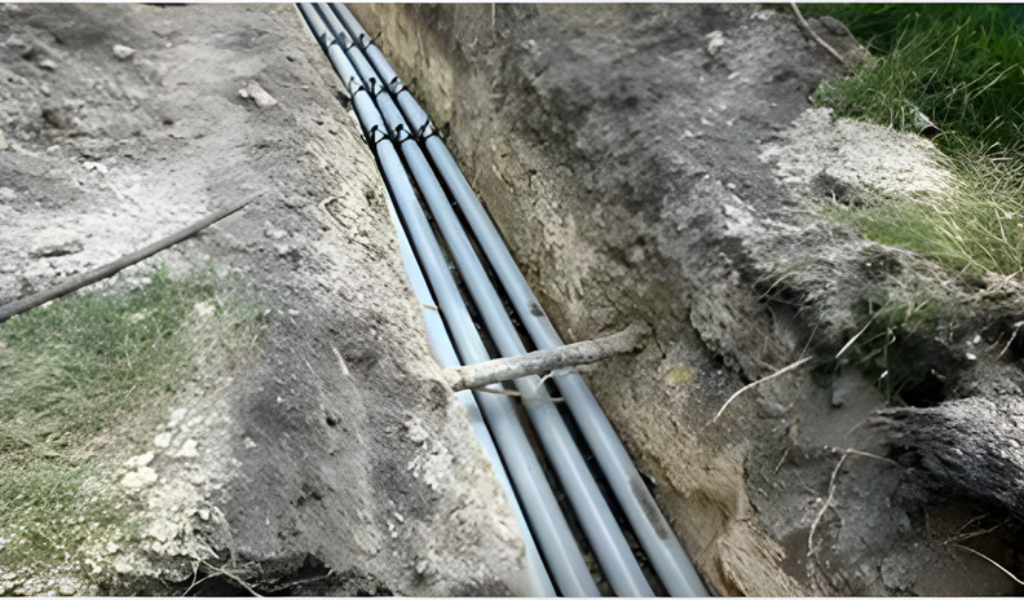
HDD services in Orlando are one of the most versatile trenchless methods available. It can be used to install virtually any underground utility, including:
Electrical and Communication Lines
Underground electrical conduit, fiber optic cables, telecom lines, and data cables can all be installed via HDD. This is especially useful for running conduit under driveways, parking lots, and roadways where open cutting would cause major disruption.
Water Lines
HDD is widely used for residential and commercial water line installations and replacements, particularly when crossing roads, landscaped areas, or existing utility corridors.
Gas Lines
Natural gas lines can be installed trenchlessly using HDD with the appropriate pipe materials, typically HDPE or steel, following applicable codes and safety requirements.
Sewer Lines
Sewer line replacement is one of the most common HDD applications for homeowners and commercial property owners. Rather than excavating the entire run, HDD can pull a new pipe into place with minimal disruption.
Fiber Optic and Telecom Infrastructure
Municipalities, telecom providers, and contractors use HDD to extend fiber optic networks under roads and across developed properties without service interruptions or traffic disruption.
HDD vs. Traditional Trenching: Key Differences
One of the most common questions property owners and contractors ask is whether HDD is better than open-cut trenching. The answer depends on the project, but here is how the two methods compare across the most important factors.
| Factor | HDD (Horizontal Directional Drilling) | Traditional Trenching |
|---|---|---|
|
Surface disruption |
Minimal, no open trench |
Significant, full trench along entire run |
|
Landscape restoration
|
Little to no required |
Extensive, concrete, asphalt, turf repair |
|
Speed |
Faster on most jobs |
Slower due to restoration time |
|
Cost |
Higher upfront in some cases |
Lower upfront, but restoration adds cost |
|
Best for |
Roads, driveways, and landscaped areas |
Open fields, long runs with no obstacles |
|
Environmental impact |
Lower |
Higher |
|
Traffic disruption |
Minimal |
Often significant |
In most urban, suburban, and devloped property scenarios, which describe most projects across South Florida, Orlando, and Central Florida, HDD is the smarter, more cost-effective choice when you factor in the total cost, including restoration.
Although the upfront directional drilling cost may sometimes be higher than traditional trenching, the overall savings from avoiding major surface repairs, landscaping work, and concrete replacement often make HDD the better long-term investment.
For most developed properties, trenchless drilling is often the better option because it reduces restoration costs, shortens project timelines, and minimizes disruption to homes, businesses, roads, and landscaped areas.
FAQs
What is horizontal directional drilling used for?
HDD is used to install underground pipes, conduits, and cables, including electrical, gas, water, sewer, fiber optic, and telecom lines, without digging open trenches across driveways, roads, landscaping, or other surfaces.
How long does a horizontal directional drilling job take?
Most residential horizontal directional drilling in Ocala is completed in a single day. Larger or more complex bores may take two to three days, depending on bore length, pipe diameter, and soil conditions.
Is HDD safe for my property?
Yes. When performed by a licensed and experienced contractor, HDD is one of the safest underground utility installation methods available. Existing utilities are located and mapped before drilling begins, and real-time tracking keeps the drill on its planned path throughout the job.
Does HDD work in all soil types?
HDD works in most soil types, including sand, clay, and mixed soils. Very rocky ground or highly consolidated materials may require specialized tooling or a different method. An experienced Florida HDD contractor will assess your soil conditions before recommending HDD.
Conclusion
Horizontal directional drilling is not just a construction technique; it is the smarter, cleaner, and often more cost-effective way to install underground utilities across developed properties in Florida. For homeowners who want to protect their landscaping, contractors who need to meet tight project timelines, and commercial clients who cannot afford to shut down parking lots or block traffic lanes, HDD delivers results that open-cut trenching simply cannot match.
Ready to Start Your HDD Project in Florida?
Trenchless Drilling LLC is a licensed, insured, and BBB-accredited HDD contractor serving Miami, West Palm Beach, Orlando, Ocala, and the greater Southeast Florida region. With over 20 years of experience, 850+ completed projects, and a 5.0 Google rating from verified clients, our team delivers accurate, efficient, and professional horizontal directional drilling results on every job.
Call us at (305) 600-1734 or request a free estimate online today.
We offer flat-rate pricing, free estimates, and 7-day availability for projects of all sizes.