
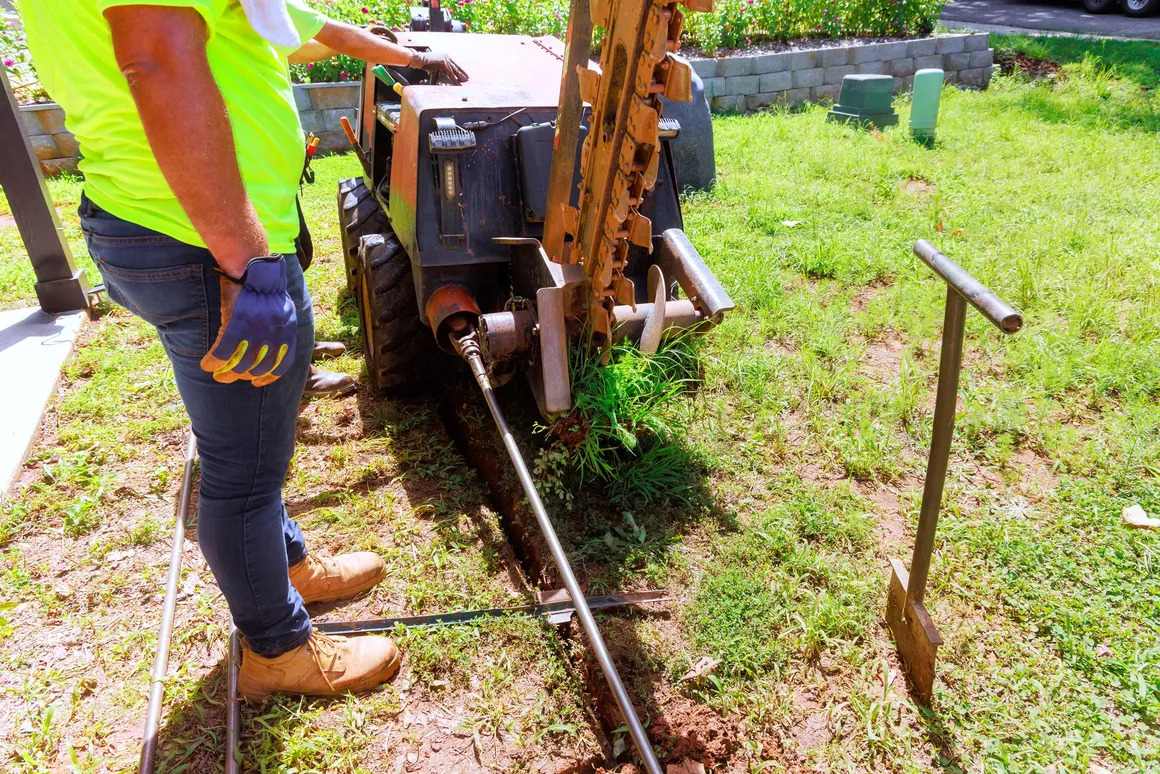
Step 1: Planning Your Underground Electrical Run
- Determine power needs and conduit size.
- Check local electrical codes (NEC regulations).
- Call 811 before directional digging to locate underground utilities.
Step 2: Choosing the Right Conduit for Trenchless Installations
- HDPE (High-Density Polyethylene) Conduit – Flexible, durable, and ideal for directional drilling.
- PVC Conduit – Can be used but may require joints or special techniques.
- Rigid Metal Conduit (RMC) – Used in high-impact areas but less common for trenchless methods.
Step 3: Trenchless Installation Methods
Directional Boring (HDD)
- Best for long-distance conduit runs under roads, sidewalks, or landscaped areas.
- A drilling rig creates a small borehole, and the conduit is pulled through.
Mole Plowing
- A vibratory plow pulls the conduit underground with minimal surface disruption.
- Ideal for shallow electrical runs across open fields or yards.
Pipe Jacking / Auger Boring
- Used for large-diameter conduits in urban or industrial applications.
- A steel casing is pushed through the soil while a boring machine removes material.
Hydro Excavation
- Uses pressurized water and a vacuum system to create a path for conduit placement.
- Used in areas with delicate underground utilities.
Step 4: Pulling Electrical Wiring Through the Conduit
- Use a fish tape or blow string method to guide wires through.
- Use THWN-rated wires for moisture resistance.
- Apply conduit-pulling lubricant for smooth wire installation.
Step 5: Final Connections and Testing
- Secure conduit terminations with weatherproof boxes.
- Connect wiring at the electrical panel and test for continuity and voltage.
- Ensure grounding is properly established.
Benefits of Trenchless Underground Conduit Installation
- Minimal disruption to landscaping, driveways, and sidewalks.
- Faster installation compared to open trenching.
- Safer for environments with existing underground utilities.
- Long-lasting and more durable in high-traffic areas.
Trenchless methods provide a smart, efficient way to install underground electrical conduit with minimal surface damage. Whether you’re working on a residential, commercial, or industrial project, this method ensures a cleaner and more cost-effective installation.