
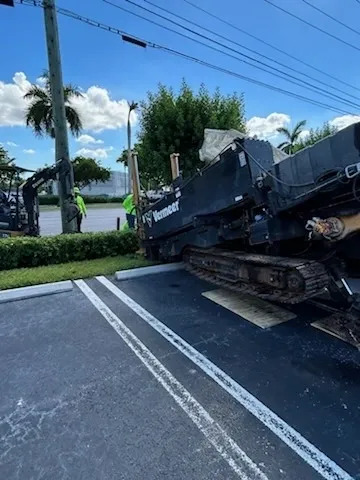
Utility conduit installation is essential for housing electrical, communication, gas, and water lines. Traditional trenching methods can be disruptive, while trenchless drilling, also known as horizontal directional drilling (HDD), offers a non-invasive and efficient alternative.
What is Trenchless Drilling?
Trenchless drilling allows underground conduit placement with minimal surface disruption, making it ideal for urban areas and environmentally sensitive locations. This method reduces excavation costs, speeds up installation, minimizes environmental impact, and is suitable for various utility conduits.
Trenchless Drilling Process
The process begins with a site survey to assess soil conditions and identify existing utilities. A pilot hole is drilled along a predetermined path, followed by borehole enlargement using reamers. The utility conduit is then pulled through the drilled path, ensuring proper alignment and tension. Finally, entry and exit points are restored, and quality control checks are performed.
Marking & Safety Considerations
Proper marking and utility location are essential for safe drilling. Standard color codes indicate different utilities, such as red for electric power lines, yellow for gas, and blue for potable water. Calling 811 before drilling helps prevent accidental utility strikes.
Applications of Trenchless Drilling
Trenchless drilling is widely used in urban infrastructure, renewable energy projects, telecommunications expansion, and water and sewer system upgrades. It enables conduit installation under roads and sidewalks without disruption and supports modern infrastructure development.
Conclusion
Trenchless drilling is revolutionizing utility conduit installation by providing a faster, safer, and more environmentally friendly alternative to traditional trenching. As urban development expands, the demand for efficient underground utility solutions makes this method a preferred choice for infrastructure projects.