
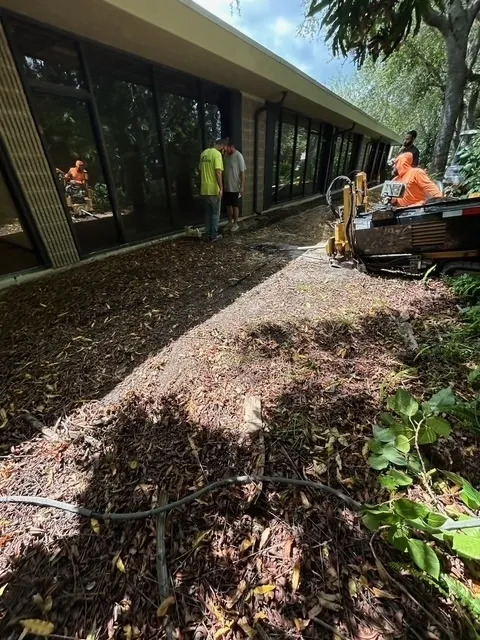
When a sewer line collapses or deteriorates beyond repair, property owners and contractors often face a daunting choice: endure the chaos of traditional excavation or opt for a trenchless solution. At Trenchless Drilling, we specialize in pipe bursting, a method that replaces damaged pipes without tearing up your yard or driveway. But what is pipe bursting, and how does it compare to other trenchless techniques? In this guide, we explain how this innovative method works, its ideal applications, and why it is a cost-effective, long-term solution for sewer line replacement.
Understanding the Pipe Bursting Method
Pipe bursting is a trenchless sewer repair technique used to replace severely damaged or collapsed pipes without extensive excavation. Unlike traditional methods that require digging trenches to remove and replace pipes, pipe bursting involves fracturing the old pipe underground while simultaneously pulling a new high-density polyethylene (HDPE) pipe into place. This method is particularly effective for replacing pipes made of clay, cast iron, or Orangeburg, which are prone to root intrusion, corrosion, and collapse over time.
The process begins with accessing the existing sewer line through two small pits: an entry point where the bursting equipment is inserted and an exit point where the old pipe fragments are removed. A conical bursting head, attached to a cable or rod, is pulled through the damaged pipe. As it moves, the bursting head fractures the old pipe outward, creating space for the new HDPE pipe to be installed in its place. The result is a seamless, durable replacement that restores full flow capacity and resists future damage.
How Pipe Bursting Compares to Other Trenchless Methods
While pipe bursting is highly effective for full pipe replacement, other trenchless methods like pipe lining (cured-in-place pipe) are better suited for repairing pipes with minor cracks or leaks. Pipe lining involves inserting a resin-coated liner into the existing pipe and curing it to form a new interior surface. However, lining does not address issues like severe misalignment, collapsed sections, or diameter restrictions.
Pipe bursting, on the other hand, allows contractors to replace the old pipe with a new one of equal or larger diameter. This is critical for properties with outdated, undersized pipes that need capacity upgrades. For example, replacing a 4-inch clay pipe with a 6-inch HDPE pipe can prevent future clogs and accommodate growing wastewater demands. In a recent project for a Tampa homeowner, we used pipe bursting to upgrade a 1950s-era sewer line, eliminating chronic backups and improving drainage efficiency.
Ideal Applications for Pipe Bursting
- Collapsed or crushed pipes caused by soil shifting, heavy traffic, or root intrusion.
- Corroded metal pipes (cast iron, galvanized steel) that have deteriorated over decades.
- Outdated materials like Orangeburg or clay pipes, which are prone to cracking and root penetration.
- Capacity upgrades where increasing pipe diameter is necessary for modern usage.
Cost, Efficiency, and Durability Benefits
Cost Considerations
The cost of pipe bursting varies based on pipe length, depth, and soil conditions, averaging 100 to 250 per linear foot. While this is higher than traditional excavation (50 – 150 per foot), pipe bursting eliminates restoration expenses such as repaving driveways or replanting gardens. For a 50-foot sewer line replacement, traditional methods could cost 12,000 (including 5,000 for landscaping), while pipe bursting might total $10,000 with no additional repairs.
Speed and Efficiency
Long-Term Durability
Addressing Common Concerns About Pipe Bursting
Some property owners worry about potential complications, such as damaging nearby utilities or encountering difficult soil conditions. However, modern pipe bursting equipment includes GPS-guided bursting heads and real-time tracking systems to ensure precision. Ground-penetrating radar (GPR) is used to map subsurface utilities before starting, minimizing risks. In rocky or compacted soils, pneumatic bursting tools provide the necessary force to fracture the old pipe without disturbing surrounding areas.
Another concern is whether pipe bursting can handle lateral connections. Advanced techniques, such as robotic cutting and lateral reinstatement tools, allow technicians to reconnect branch lines without excavation. For example, during a recent Orlando project, we reconnected six lateral lines to a new HDPE sewer main using trenchless methods, preserving the client’s landscaped garden.
Why Choose Trenchless Drilling for Pipe Bursting?
At Trenchless Drilling, we have refined pipe bursting techniques over decades to serve property owners, contractors, and developers directly. Our team uses state-of-the-art equipment, including hydraulic bursting rigs and high-resolution inspection cameras, to deliver precise results. We prioritize projects where preserving property integrity is paramount, such as historic homes, commercial sites, and environmentally sensitive areas.
Our transparent pricing model includes no hidden fees, and we offer 24/7 emergency services for urgent repairs. Whether you are a homeowner facing a collapsed sewer line or a contractor managing a tight deadline, our expertise ensures minimal disruption and maximum durability.