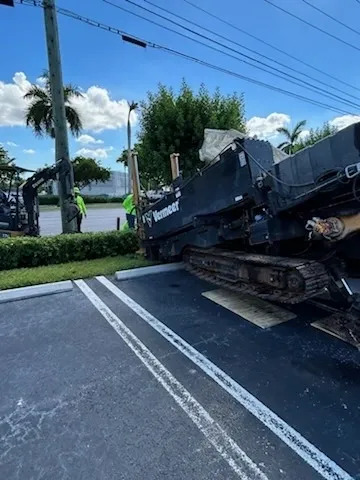
When faced with a damaged sewer or water line, property owners and contractors must decide between two approaches: trenchless water line replacement and traditional excavation. At Trenchless Drilling, we specialize in trenchless methods, but we understand that every project has unique needs. This guide compares the processes, costs, and impacts of both methods to help you make an informed decision. Whether you are repairing a sewer line under a historic garden or replacing a water line beneath a busy commercial property, understanding these differences ensures you choose the best solution for your budget, timeline, and property.
Key Differences Between Trenchless and Traditional Methods
Traditional sewer and water line repair involves excavating large trenches to access and replace damaged pipes. This method requires heavy machinery to dig through soil, pavement, or landscaping, often resulting in destroyed lawns, disrupted traffic, and costly restoration. In contrast, trenchless water line replacement uses advanced technology to repair or replace pipes with minimal digging. Techniques like pipe lining (inserting a resin-coated liner into the existing pipe) and pipe bursting (fracturing the old pipe while pulling a new one into place) require only small access points. For example, replacing a water line under a driveway with traditional methods might involve tearing up 50 feet of concrete, while trenchless methods could complete the job with two 3-foot pits.
When to Choose Trenchless Water Line Replacement
Trenchless methods excel in scenarios where preserving property aesthetics or minimizing downtime is critical. They are ideal for repairing pipes under driveways, gardens, or historic structures where excavation would cause irreversible damage. Trenchless water line replacement is also advantageous in urban areas with limited space or strict permit requirements for road closures. For instance, a contractor working on a downtown Orlando apartment complex used trenchless methods to replace a sewer line beneath a parking lot without disrupting tenant access. However, traditional repair may still be necessary for severely misaligned pipes or projects requiring complete pipe removal due to collapse.
Cost and Long-Term Maintenance Comparison
While trenchless water line replacement often has a higher upfront cost than traditional methods, it offers significant long-term savings. Traditional excavation typically costs between 50 and 150 per linear foot, but ancillary expenses like landscaping, pavement repair, and labor for restoration can add 3,000 to 10,000 to the total. Trenchless methods range from 80 to 250 per linear foot but eliminate most restoration costs. Over time, the durability of materials like epoxy liners and high-density polyethylene (HDPE) pipes reduces maintenance needs. A study by the National Association of Home Builders found that trenchless repairs last 50+ years versus 20–30 years for traditional PVC pipes. For property owners planning to stay long-term, trenchless methods provide better value.
Environmental and Property Impact
The environmental benefits of trenchless water line replacement are substantial. Traditional excavation disturbs soil, uproots vegetation, and increases erosion risks, while trenchless methods preserve ecosystems and reduce carbon emissions from heavy machinery. Additionally, trenchless repairs generate less waste, as old pipes are either lined or left in place. For properties with mature trees or environmentally sensitive areas, trenchless techniques prevent root damage and soil contamination. A recent project in Miami’s Coconut Grove neighborhood used trenchless methods to replace a sewer line beneath a protected tree canopy, avoiding fines and preserving the area’s ecological balance.
Common Concerns and Limitations
Some contractors hesitate to adopt trenchless water line replacement due to misconceptions about its limitations. While trenchless technology cannot address every issue, such as pipes with extreme offsets or multiple collapses, advancements in equipment have expanded its applications. Robotic cutters can clear blockages, and lateral reinstatement tools restore connections to branch lines without excavation. A professional inspection using sewer cameras is essential to determine feasibility. For example, a 2022 project in Tampa used camera diagnostics to identify a 40-foot section of corroded pipe, which was then fully lined without digging.
Why Trust Trenchless Drilling?
At Trenchless Drilling, we prioritize solutions tailored to property owners, contractors, and developers, not just utility giants. Our expertise in trenchless water line replacement spans decades, with a focus on minimizing disruption and maximizing cost efficiency. We use GPS-guided drilling rigs and high-resolution cameras to ensure precision, and our transparent pricing model includes no hidden fees. Whether you are a homeowner avoiding garden destruction or a contractor racing against a deadline, our team delivers reliable, eco-friendly results.
Make the Right Choice for Your Property
unique needs. If you value speed, sustainability, and minimal disruption, explore our trenchless water line replacement services. Contact Trenchless Drilling today for a free assessment and discover why Florida trusts us for innovative, lasting repairs.