
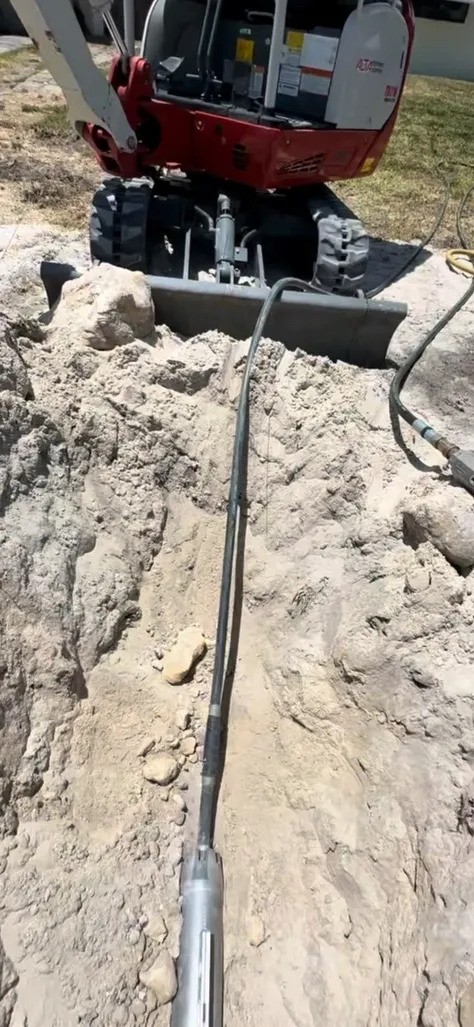
Missile bore and directional bore are both methods used in horizontal directional drilling (HDD), a trenchless method of installing underground pipes, conduits, and cables without disturbing the surface. Here’s a brief comparison between the two:
1. Missile Bore:
Missile bore and directional bore are both methods used in horizontal directional drilling (HDD), a trenchless method of installing underground pipes, conduits, and cables without disturbing the surface. Here’s a brief comparison between the two:
1. Missile Bore:
- Also known as "pilot tube microtunneling" or "pneumatic boring."
- Involves launching a guided, self-contained projectile through the ground to create a small bore path.
- Typically used for shorter distances and smaller diameter bores.
- Suitable for softer soil conditions where the projectile can travel more easily.
- Offers a cost-effective solution for certain types of installations.
1. Directional Bore:
- Involves the use of specialized drilling equipment to create a curved or straight underground pathway for utilities.
- Utilizes a drill bit or cutting tool at the leading end of a drill string to bore through the soil.
- Can cover longer distances and accommodate larger diameter installations compared to missile bore.
- Offers greater flexibility in terms of trajectory and depth control.
- Suitable for a wide range of soil conditions, including harder materials and rocky terrain.
- Generally, directional bore operations require more sophisticated equipment and expertise compared to missile bore.
In summary, while both missile bore and directional bore are trenchless methods used in HDD projects, they differ in terms of their application, suitability for different soil conditions, distance coverage, and equipment requirements. The choice between the two methods depends on factors such as project requirements, soil conditions, budget constraints, and available equipment and expertise.Also known as “pilot tube microtunneling” or “pneumatic boring.”
- Involves launching a guided, self-contained projectile through the ground to create a small bore path.
- Typically used for shorter distances and smaller diameter bores.
- Suitable for softer soil conditions where the projectile can travel more easily.
- Offers a cost-effective solution for certain types of installations.
1. Directional Bore:
- Involves the use of specialized drilling equipment to create a curved or straight underground pathway for utilities.
- Utilizes a drill bit or cutting tool at the leading end of a drill string to bore through the soil.
- Can cover longer distances and accommodate larger diameter installations compared to missile bore.
- Offers greater flexibility in terms of trajectory and depth control.
- Suitable for a wide range of soil conditions, including harder materials and rocky terrain.
- Generally, directional bore operations require more sophisticated equipment and expertise compared to missile bore.
In summary, while both missile bore and directional bore are trenchless methods used in HDD projects, they differ in terms of their application, suitability for different soil conditions, distance coverage, and equipment requirements. The choice between the two methods depends on factors such as project requirements, soil conditions, budget constraints, and available equipment and expertise.