
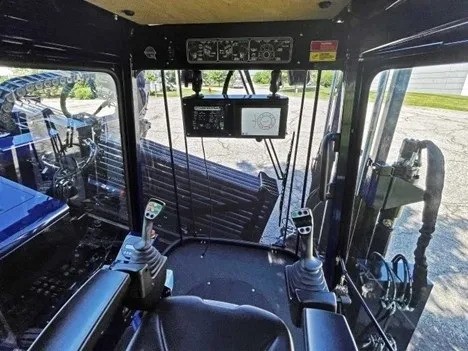
Steering a Horizontal Directional Drill (HDD) is a sophisticated process that combines the principles of physics, engineering, and technology to precisely navigate the drill bit through the ground along a predetermined path. The steering process involves several key components and steps:
1. Steerable Drill Bit and Assembly
- The front end of the HDD setup includes a specially designed drill bit that can be steered. This is often part of a larger assembly that includes a housing for the drill bit, a bent sub (a slight angle in the drilling apparatus), and a transmitter for sending signals back to the surface.
2. Directional Drilling System
- The steering is achieved using a directional drilling system that can change the orientation of the drill bit. By rotating the entire drill string from the surface, the drill bit drills straight ahead. When rotation is stopped and the drill string is pushed forward, the direction of drilling follows the orientation of the bent sub, allowing the drill bit to change direction.
3. Real-time Location Tracking
- A key component of steering is knowing the precise location of the drill bit underground. This is achieved through the use of a downhole transmitter located near the drill bit that sends signals to a receiver on the surface. The transmitter emits electromagnetic signals that allow the drill operator to determine the drill bit's location, depth, and orientation.
4. Walk-over Location System
- One common method for tracking the drill bit is the walk-over location system, where a technician walks along the drill path on the surface with a receiver that detects the signals from the transmitter near the drill bit. This system provides real-time data on the drill bit's position.
5. Wireline Systems
- Another method involves the use of a wireline system, where a wire runs inside the drill string to transmit data from the drill bit to the surface. This can provide more accurate data, especially in deeper or more complex drills.
6. Adjusting the Drill Path
- The operator uses the real-time location data to make adjustments to the drill path. This involves controlling the rotation of the drill string, the application of hydraulic pressure to push the drill forward, and the angle of the bent sub to steer the drill bit in the desired direction.
7. Pilot Hole and Reaming
- Initially, a pilot hole is drilled along the planned path. Once the pilot hole is complete, the hole is enlarged to the required size in one or more passes with reaming tools, which are also steered along the path of the pilot hole to ensure accuracy.
Steering an HDD requires a combination of skilled operators, sophisticated technology, and detailed planning. It allows for precise control over the drill path, enabling the installation of utilities under obstacles like rivers, roads, and built-up areas with minimal surface disruption.