
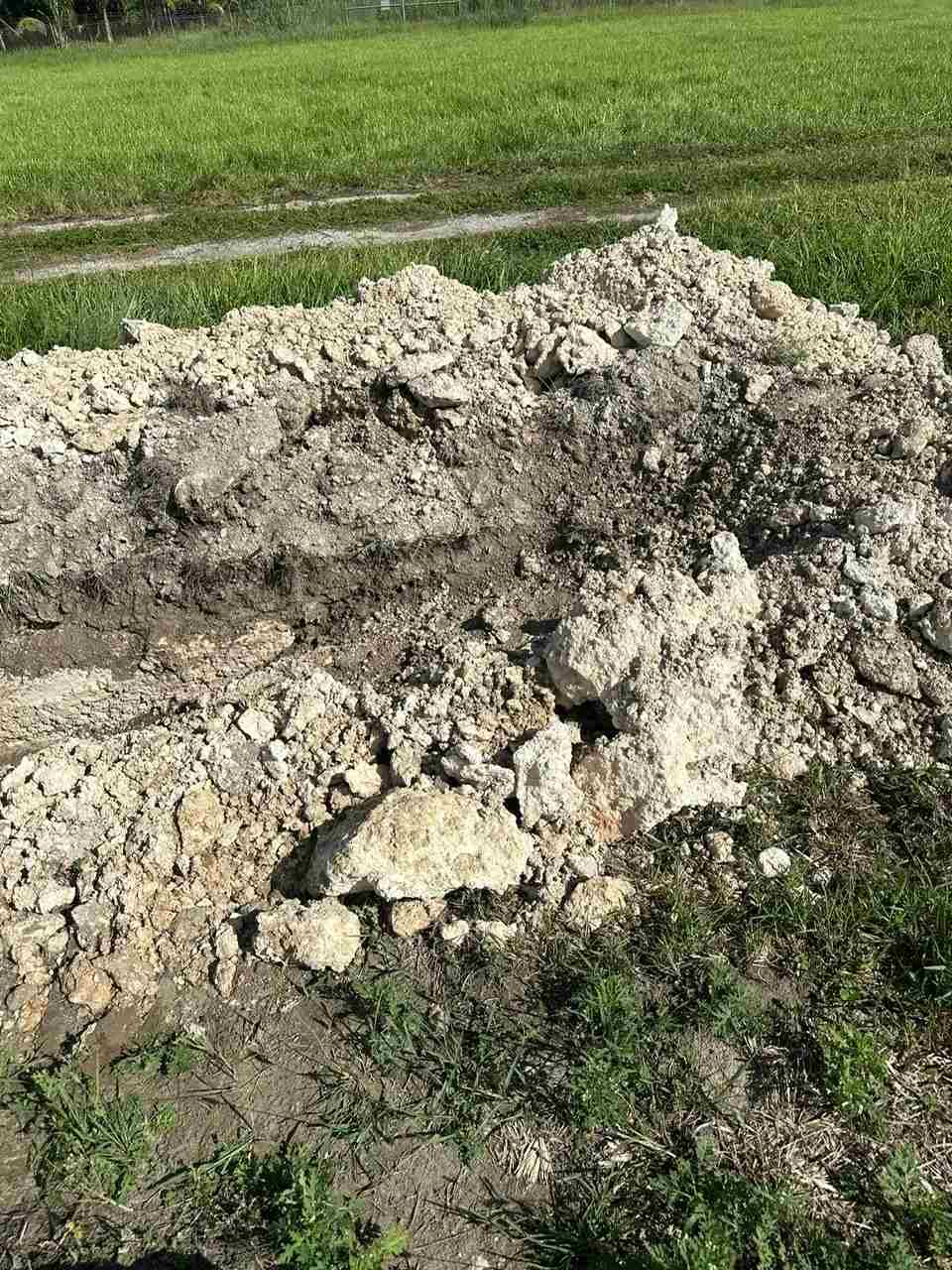
A lot of areas in South Florida like Homestead has a lot of limestone in the ground. Directional drilling through limestone presents specific challenges and opportunities due to the unique properties of limestone formations. Here’s an overview of how directional drilling is approached in limestone environments:
1. Geological Characteristics of Limestone
Formation Properties:
Limestone is a sedimentary rock primarily composed of calcium carbonate. It often forms in layered deposits and can exhibit varying degrees of porosity and permeability. Some limestone formations may also contain fractures or caves, adding complexity to drilling operations.
Challenges:
- Variable Hardness: Limestone can range from relatively soft to very hard, affecting drilling efficiency and wear on equipment.
- Cavernous Zones: In some areas, limestone formations may contain natural cavities or voids, posing risks of wellbore instability.
- Fractures: Limestone can be fractured or jointed, which may complicate directional control and increase the risk of lost circulation.
2. Directional Drilling Techniques in Limestone
Drill Bit Selection:
- PDC Bits: Polycrystalline diamond compact (PDC) bits are commonly used for drilling through limestone due to their durability and ability to handle hard rock formations.
- Roller-Cone Bits: These can also be effective, especially in more variable or fractured limestone, as they provide good penetration rates and stability.
Drilling Fluids:
- Mud Types: Using the right drilling mud is crucial for managing wellbore stability. In limestone, drilling fluids help to control pressure, cool the bit, and transport cuttings. The choice of mud (e.g., water-based, oil-based) can affect how well it deals with limestone’s properties.
- Lost Circulation Material: In cases where there are significant fractures or cavernous zones, lost circulation materials (LCM) may be added to the drilling fluid to prevent fluid loss into the formation.
Directional Control:
- Steerable Systems: Advanced steerable systems and measurement-while-drilling (MWD) technologies are essential for maintaining precise directional control through limestone. These systems provide real-time data on the wellbore’s position and orientation, allowing for accurate steering and adjustments.
- Logging While Drilling (LWD): LWD tools help monitor formation properties and provide information on the geological environment, assisting in making real-time decisions during drilling.
3. Challenges and Mitigation Strategies
Formation Stability:
- Wellbore Collapse: Limestone can sometimes be unstable, especially in fractured or cavernous zones. To mitigate this, casing and cementing practices are used to stabilize the wellbore and prevent collapse.
- Pressure Management: Proper management of drilling fluid pressure is crucial to prevent formation damage and control wellbore stability.
Fractured Formations:
- Directional Drilling in Fractures: When drilling through fractured limestone, it’s important to carefully monitor and manage the direction of the wellbore to avoid complications such as loss of circulation or stuck pipe. Advanced directional drilling techniques and real-time adjustments can help navigate these challenges.
4. Applications of Directional Drilling in Limestone
Resource Exploration:
Directional drilling allows for effective exploration and extraction of resources such as oil, gas, and groundwater from limestone formations. By accessing multiple targets from a single location, it maximizes resource recovery while minimizing surface impact.
Environmental and Engineering Projects:
Directional drilling through limestone can also be used for environmental projects, such as groundwater monitoring and contamination remediation. Additionally, it’s employed in engineering projects like tunneling or pipeline installation where limestone formations are encountered.
5. Innovations and Advancements
Real-Time Data and Automation:
Advancements in real-time data acquisition and automation technologies enhance the precision and efficiency of directional drilling in limestone. Improved software for drilling optimization and predictive analytics helps in managing complex geological conditions.
Advanced Materials and Techniques:
Ongoing innovations in drill bit materials and construction, as well as enhanced drilling fluids, contribute to more effective drilling through challenging limestone formations. These improvements help reduce costs, increase safety, and enhance overall drilling performance.
Directional drilling through limestone requires specialized techniques and equipment to address the formation’s unique challenges. By utilizing advanced drilling technologies, selecting appropriate drill bits and fluids, and employing real-time monitoring systems, directional drilling can successfully navigate limestone formations and optimize resource extraction. As technology advances, the efficiency and effectiveness of drilling through such formations continue to improve, supporting a range of exploration, environmental, and engineering applications.