
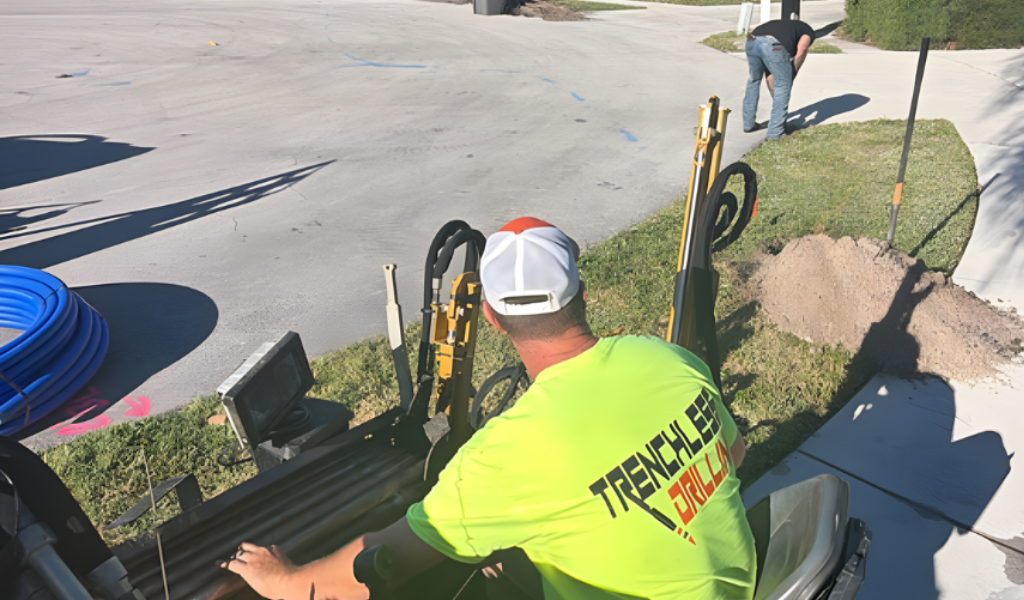
A burst pipe under the driveway is usually fixed fastest by stopping the water, confirming the leak location, and installing a replacement/bypass line using trenchless boring with small access pits, so you don’t have to break concrete or destroy landscaping. In most cases, the “winning” strategy is to replace the failed section by routing a new line under the driveway rather than gambling on a long exploratory dig.
If you’re a property owner, this situation is stressful for two reasons. The leak is urgent, and the driveway is the worst place to dig. The good news is that modern trenchless methods make it possible to work under hardscape while leaving the surface largely untouched. This is exactly why trenchless drilling Orlando contractors often rely on directional boring and HDD for crossings beneath driveways and sidewalks.
What Usually Causes A Pipe To Fail Under A Driveway?
Most driveway-area pipe failures come down to a mix of age, pressure, movement, and installation history, including:
- Shifting soil + traffic load: Driveways handle repeated vehicle weight; over time, soil movement can stress pipes and joints.
- Older materials or fittings: Aging service lines, corroded metal, or brittle PVC can crack with ground movement or thermal swings.
- Poor bedding/backfill: If the pipe wasn't installed on stable bedding, voids can form and create stress points.
- Tree roots (more common with sewer/drain lines): Roots exploit joints and small cracks, then expand the damage.
How Do You Know The Leak Is Actually Under The Driveway?
Before anyone touches concrete or landscaping, you want enough confidence that you’re chasing the right problem.
Look for a combination of these signals:
- Water meter behavior: If all fixtures are off and the meter still moves, that's a strong sign of a hidden leak.
- Pressure drop or intermittent pressure: Especially noticeable at showers, irrigation, or hose bibs.
- Wet spots near the driveway edge: Water often "escapes" at the easiest point, edges, seams, or low areas.
- Cracks, settling, or washout: Leaks can saturate soil and cause settlement that shows up as cracks or dips.
Practical tip (owner-friendly):
- If you’re unsure, treat this as a “confirm first” situation. Using methods like how to detect underground water leak testing can prevent tearing up the wrong area.
What Should You Do Immediately To Limit Damage?
If you’re unsure whether the pipe actually runs under your driveway, a trenchless evaluation can confirm the safest path before any concrete is touched.
Handle the emergency first, then the repair strategy.
Do this in order:
- Shut off the water (main valve).
- Avoid driving over the suspected area (extra load can worsen soil washout).
- Document the situation (photos/video for insurance, HOA, or contractor quotes).
-
Call the right pros for the right job:
- A plumber (or utility provider) typically confirms the failure point and handles tie-ins.
- A trenchless drilling crew handles the under-driveway installation path (boring/drilling + pulling the new line).
This is where experienced teams, including underground utility contractors in West Palm Beach, coordinate drilling, safety, and utility protection for clean crossings.
When Is Digging A Bad Idea?
Digging isn’t “wrong”, but it becomes a bad bet when it turns into a long excavation with uncertain payoff.
Digging is usually a bad idea when:
- The suspected failure is under the concrete slab itself
- The leak location isn't 100% confirmed and would require exploratory trenching
- The driveway is large, reinforced, or recently finished (high restoration cost)
- You want to avoid downtime (no parking access while the concrete cures)
This is why “crossings” are commonly handled by boring methods that keep the surface intact.
What's The "No-Demolition" Way To Get A New Line Under Concrete?
For many driveway scenarios, the cleanest fix is: Install a replacement/bypass line by boring underneath the driveway using trenchless drilling or HDD, with two small access pits.
Why this works:
- You avoid cutting and re-pouring concrete
- You reduce the restoration scope (small pits vs. full trench)
- You maintain curb appeal and usable access sooner
This approach is consistent with the way trenchless boring is described for driveway crossings: small pits, guided path, pull-through installation.
How Does Trenchless Boring Work On A Typical Property?
Here’s a clear, property-owner-friendly walkthrough (what you should expect):
1) Site check + planning
- Confirm entry/exit pit locations (usually one on each side of the driveway)
- Review known utility paths and plan the safest bore route
2) Utility locating + safety
- Arrange marking/locating before excavation (Florida property owners should treat this as non-negotiable)
3) Create access pits
- Small excavation areas, sized for equipment and safe working clearance
- If conditions call for precision, hydro excavation can reduce risk around tight areas
4) Bore/drill under the driveway
- Guided drilling creates the underground path without disturbing the driveway surface
5) Pull in the new pipe/conduit
- The new line is pulled through the bore path
- For HDPE systems, pipe fusing may be used to create a continuous run before pullback
6) Tie-in + verification
- The line is connected to the system, typically by a plumber or the utility team, depending on the scope of work.
- Backfill and restore pits cleanly
Which Trenchless Approach Fits Your Situation Best?
Think of it as matching the method to the job constraints.
If the goal is "get a new line across the driveway with minimal disruption.”
- Directional boring / HDD is usually the go-to for controlled crossings and utility installs.
If you're also planning future electrical/data upgrades
- Consider doing it as part of conduit installation in Orlando so the pathway is protected and future-ready.
If the issue is sewer-related, not water supply
- Trenchless sewer options (including pipe bursting mentions) may be appropriate depending on conditions and approvals.
- For related reading, also explore fix sewer line without digging.
Important clarity:
- The "best method" depends on pipe type, location, depth, and what's already in the ground. The smart move is a plan that avoids unnecessary demolition.
What Does The Timeline Look Like From Call To Completion?
Most owners want the “how long will my life be disrupted?” answer.
In many residential crossings:
- Assessment & planning: usually fast once access and utilities are clear
- Install day: many smaller trenchless installs can be completed quickly because you're not trenching the full length (less excavation + less restoration).
The biggest schedule drivers are:
- Utility locating coordination (don't rush this)
- Soil conditions
- Complexity of tie-ins and approvals
Frequently Asked Questions
Can a burst pipe under a driveway really be fixed without breaking concrete?
Yes, in many cases. Trenchless boring allows a new pipe to be installed beneath the driveway using small access pits, avoiding full concrete removal.
How do contractors confirm the pipe is under the driveway before drilling?
They rely on meter testing, pressure checks, visible surface signs, and utility locating. This “confirm first” step prevents unnecessary excavation.
Is trenchless boring safe around other underground utilities?
When planned correctly, yes. Utility locating and controlled drilling paths are essential to avoid existing lines and reduce risk.
Does this method work for both water and sewer lines?
It can. Water service lines are often replaced with a bored bypass, while sewer issues may use other trenchless options depending on depth and condition.
Conclusion — Fix the Pipe, Not the Driveway
A burst pipe under a driveway doesn’t have to mean broken concrete, torn-up landscaping, or weeks of disruption. With modern trenchless drilling, property owners can replace or bypass failed lines while keeping hard surfaces intact. The key is acting quickly, confirming the problem location, and choosing a repair method that prioritizes precision over demolition. When done right, you restore service faster and protect your property at the same time.
Need to Fix a Burst Pipe Under Your Driveway Without Digging?
If you’re dealing with a suspected leak beneath concrete, the smartest next step is a trenchless evaluation. A planned bore can install a new line cleanly, safely, and with minimal surface impact. Contact a specialist at Trenchless Drilling to assess your property and map the safest path forward.
- Arrange marking/locating before excavation (Florida property owners should treat this as non-negotiable)