
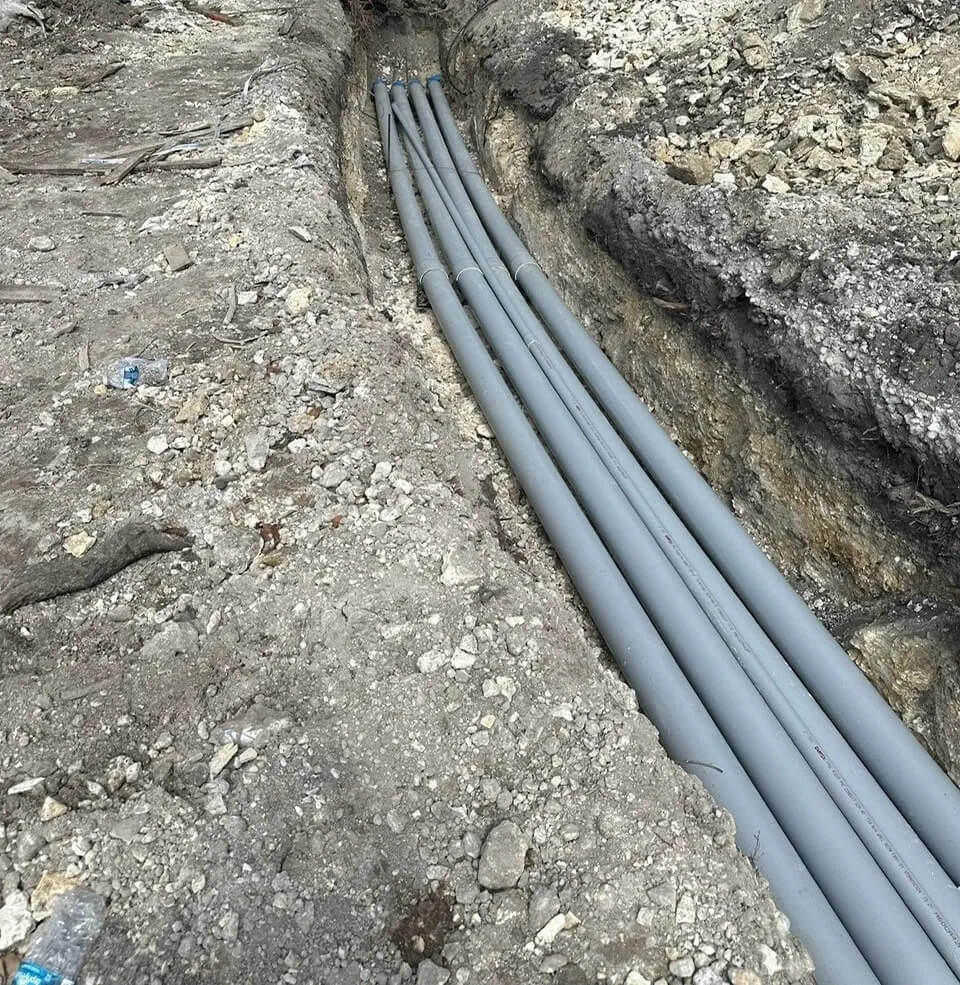
Whether you’re planning to install a fence, add a new water line, or run power to a shed, it’s important to know: digging without proper clearance can damage underground utilities and violate building codes.
That’s why Florida homeowners are required to call Sunshine 811 before starting any digging project—and why checking building code requirements is just as important.
Planning and Design
- Site Assessment: Evaluate the geology, existing utilities, and environmental considerations at the site. This helps in selecting the optimal drilling path and determining the appropriate equipment.
- Drilling Path Design: Create a detailed plan for the drilling trajectory, including entry and exit points, borehole depth, and alignment. This should account for the force main's diameter and any potential obstacles.
- Permitting: Obtain necessary permits and approvals from local authorities or environmental agencies, as HDD can impact the surrounding area.
Drilling Process
- Drill Rig Setup: Position the drill rig at the entry point of the borehole. The rig will guide the drill bit and control the drilling direction.
- Pilot Hole Drilling: Drill a small-diameter pilot hole along the designed path. This involves using a drill bit attached to a drill rod, which is steered by a guidance system to maintain the correct alignment.
- Reaming: Once the pilot hole is complete, ream the hole to the required diameter. This step enlarges the hole to accommodate the force main. Reaming typically involves multiple passes with progressively larger reamers.
- Pipe Pullback: After the hole is reamed to the appropriate size, the force main pipe is attached to the back of the reamer. The pipe is then pulled through the borehole, pulling the reamer and the pipe into place. This step must be carefully managed to avoid damaging the pipe or disrupting the surrounding soil.
- Final Connections: Once the pipe is in place, make any necessary connections, such as joints or fittings. Ensure the force main is properly aligned and secure.
- Testing and Commissioning: Conduct pressure tests and inspections to verify the integrity of the installation. Ensure that there are no leaks and that the force main meets all operational requirements.
Considerations
- Soil Conditions: The type of soil or rock can significantly impact drilling difficulty and equipment choice. Harder materials may require specialized drill bits or additional equipment.
- Utility Avoidance: Ensure that the drilling path avoids existing utilities or structures. Use utility locators and other methods to identify potential conflicts.
- Environmental Impact: Minimize environmental disruption by controlling drilling fluids and managing waste. HDD is generally less invasive than traditional trenching but still requires careful environmental management.
Directional drilling is a complex process that requires careful planning and execution to ensure success and minimize risks. Engaging with experienced professionals and following best practices can help achieve a smooth and effective installation of a force main.